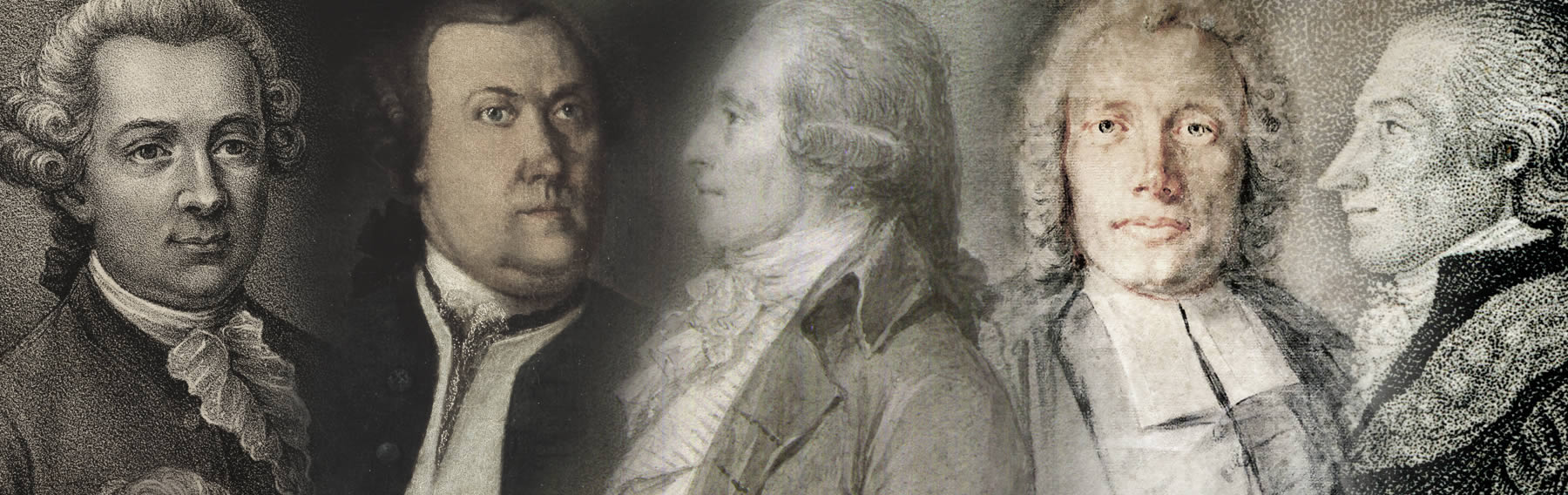
A kaleidoscope of works centred on the world of Linnaeus (Mundus
Linnæi). The series incorporates various topics written by leading
experts in such fields as culture, the arts, and natural
history. New topics, forgotten stories, facsimile prints, new
knowledge - all presented in this series of beautiful and scholarly
publications - look out for the following book titles!
THE MUNDUS LINNÆI SERIES - No: 1.
CHRISTOPHER TÄRNSTRÖM'S JOURNAL A Passage between Europe and East Asia in the year 1746
Christopher Tärnström (1711 -1746) was the first of Linnaeus' followers to be instructed to study and document flora and fauna outside Europe, hence the name the first Linnaeus apostle.
Tärnström travelled as ship's chaplain on the East Indies Ship Calmar. The ship sailed from Gothenburg in Sweden for China on 13 February 1746. Unfortunately the Calmar was too late to take advantage of the southwest monsoon winds between Sumatra and Java and was forced to find a winter birth in the Pulo Condor islands not far from what is now known as Con San in Vietnam. The Calmar stayed here until mid April the following year, and when she did leave port it was without her ship's chaplain! Following a few weeks illness, Tärnström died at the age of 35 on 4 December 1746. He was buried not far from their camp in Calmare Bay.
The book includes a short narration by Andreas Gadd about the stay on Pulo Condor, which in some points supplements Tärnström's journal.
Kristina Söderpalm has transcribed all Tärnström's material and this will be the first time that the work has been made available in Swedish. The material will also be translated and published word for word in one of the volumes of The Linnaeus Apostles - Global Science & Adventure.
Life on board as described in Tärnström's journals is arguably better than any other 18th century descriptions. The journals are also personal diaries in as much as he describes his own feelings and thoughts. His ambitions with respect to the study of nature and how field studies ā la Linnaeus were carried out, are particularly well described in his notes from Cadiz and in even more detail from Pulo Condor (Vietnam).
Finally it should be said that Tärnström's journal has literary qualities that make the reading fascinating.
LINNAEUS' NOTEBOOK FROM 1725 - the very first writings by Carl Linnaeus
LINNAEUS' FIRST YEARS AT SCHOOL Embosomed in the southern Swedish county of Småland lies Växjö, the town where Linnaeus first went to school. Even today one can visit his school building - the old grammar school, Gymnasium, next to the cathedral.He was only a seven year old boy when he came to Växjö to embark on his education with the tutor Johan Telander. Later, he acquired the reputation of being a good "knower of plants", an interest which absorbed so much of his time that once he had moved up to the Gymnasium his other studies were sidelined. In 1726 his teachers felt themselves obliged to advise his father rather to put his son into some trade or other as "he was unable to achieve anything with the book". The county medical officer Johan Rothman - also father of the Linnaeus Apostle Göran Rothman - intervened as mentor and provides the young Linnaeus and his parents with such support that Carl could continue his studies. Rothman undertook to teach Carl medicine and Latin and further to encourage his interest in natural history by reading Boerhaave, for instance, and Tournefort and Plinius. This is where his path to becoming one of the foremost naturalists in the world had its beginning, which would affect mankind's view of nature for ever after.
VOLUMES 1-3 The book, generally referred to as "Örtaboken", the Book of Plants, clearly reflects young Linnaeus' wide ranging thoughts in note form. There are also a few sketches, drawings and tables. The format of the notebook is 100x150mm and it contains 169 pages. In their relatively complicated approach, the notes reveal a mature young man with hints of brilliance.
Volume 1 will be a complete facsimile edition of the Notebook and will reproduce as accurately as is possible the18th century original. The next volume, Volume 2, includes the complete transcription, page for page, into English. Here the sometimes hard-to-read notes in the Notebook become accessible. The volumes will be published following both the format and pagination of the original. In the concluding volume, Volume 3, the author Torbjörn Lindell contributes his comments on the texts in the Notebook. For example the young Linnaeus quotes from about 70 learned oeuvres which are commented on - why and how did Linnaeus have access to those, their characters, scientific and scholarly significance and where they occur in the writing of the Notebook et cetera. Volume 3 concludes with references and an extensive index of search words.
UNIQUE DOCUMENT NOW MADE AVAILABLE
The publication of the Linnaeus' Notebook in the series Mundus Linnæi is of significant international scientific importance. New aspects of the young Linnaeus' life and thinking will benefit research, but maybe also make for exciting and enjoyable reading for anybody interested in this young talent, whose studies were so very nearly cut off due to others' lack of understanding...
SUBSCRIPTION - LIMITED EDITION
You can sign up today for a subscription of the Limited Edition which will be sent directly to your address in 2008, this collectors' edition will be published in only 500 numbered copies.
Most people know that CARL LINNAEUS (1707-1778) is world-famous for the system of nomenclature he developed, still used by botanists and zoologists to this day. He is also known for his travels throughout Sweden and descriptions of the Swedish landscape, and for having inspired worldwide travel for scientific purposes by the chosen few who came to be known as the Linnaeus 'apostles'. But it may be less well known that for most of his life he was a practising doctor of medicine.
This book tells the extraordinary story of this son of a Swedish country clergyman who had already written when still a schoolboy an advanced Notebook (untitled but generally known as "örtabok" or The Book of Plants) in which, in compact handwriting and mainly in Latin and Swedish, he described his own and others' reflections not only on nature in general, but on medicinal cures and the use of plants in alleviating sickness.
Carl Linnaeus qualified as a Doctor of Medicine in 1735 in the Netherlands with a thesis on malaria. His doctorate qualified him to teach Medicine, make professional visits to patients, write prescriptions and practise medicine everywhere. During this his only period outside Sweden he also took advantage of the opportunity to visit Europe's leading medical and botanical gardens, including Amsterdam's Hortum Medicum and London's Chelsea Physic Garden.
DOCTOR CARL LINNAEUS PHYSICIAN is a scholarly tour of the less known side as a practising scientific medical man of a universal genius. It has been researched and written by the Swedish physician and author Nils-Erik Landell. Born in Stockholm in 1935, Landell has published nearly fifty books in the field of natural and cultural history in addition to many scientific papers over a range of medical disciplines. He has been a committee member of the Swedish Linnaeus Society and is reckoned among today's greatest experts on Linnaeus.
TEXTILES AND DYES FROM THE WORLD OF CARL LINNAEUS AND HIS APOSTLES.
A research and publishing project designed to gather and collate information about the textiles, dyes and dying methods that were documented and described by Carl Linnaeus and his apostles in the 18th century.
The project, which will include descriptions of 18th century dying processes using plants and minerals, will work closely with the Linnaeus Apostles project. The results will be published by textile historian Viveka Hansen (fellow of the Linnean Society of London) in a specially designed book that will include hand made colour samples using original recipes from various parts of the world, transcripts by Linnaeus and the his apostles. The book will also be lavishly illustrated with contemporary and modern illustrations and maps.
FACT FILES
Use the FACT FILES to put the real world of Linnaeus first - it is pure knowledge! You can learn more about the people listed below, the subjects that interested Carl Linnaeus, his Apostles and IK Foundation & Company's Linnaeus related publications, news and exhibitions.