The IK Foundation Bushman Art Collection, is a collection
of !Xu and Khwe folk art from the first generation of the Schmidtsdrift
camp in the northern part of the Cape Province in South Africa.
The collection comprises one hundred or so art works including
linoleum cuts and gouache and oil paintings. The works, which
are typical of this remarkable environment, have broken with
tradition and are new and vibrant. The inspiration lies in yearning
and despair, myth and novelty, colourfulness and subtle story
telling - they are not an extension of primitive or primordial
art. Over 100 years ago, the beautiful rock paintings of the
Kalahari Desert were also painted by the San people, so the
question to ask is, has new ground been broken or has lost ground
been reclaimed?
The children of the San-people in the Kalahari region of South
Africa - today's generations look to the future!
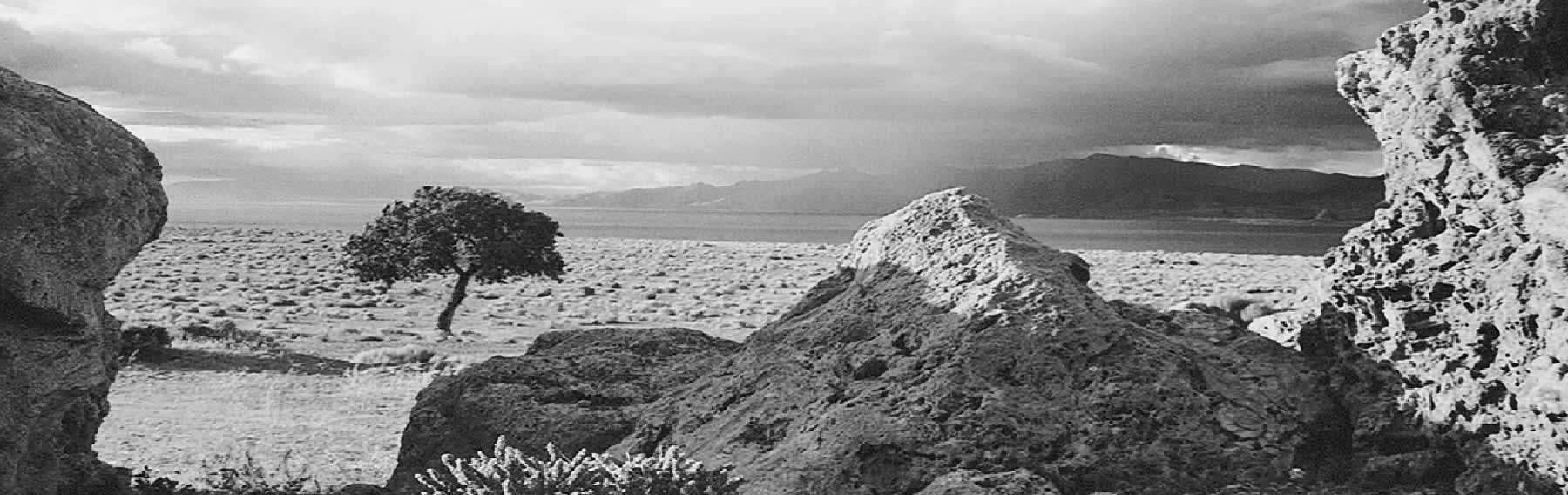
The Kalahari region covers much
of southwest South Africa. Although large areas are desert most
of the region is covered by brushwood and trees. For many hundreds
of years the Kalahari region has been the home of the San people.
BUSHMEN - SAN
Bushmen was the name the European colonials used
to describe the most ancient of the African races. For instance,
in the 18th century, Anders Sparrman, the naturalist and Linnaeus
apostle, described the Bushmen in his travel journal from South
Africa as - a rather short and light skinned people.
From their original homelands in northern Africa, where they
lived many thousands of years ago, the Bushman migrated south
to central Africa before finally settling in southern Africa
were they live today.
The Schmidtsdrift camp was established as a refugee camp for
San soldiers who had fought for the army of South African. Various
cultural projects highlighting the traditional art and music
of the San people have been established. The work reflects their
long history.
!XU AND KHWE
In the 1990s, approximately 5 500 people from the !Xu and
Khwe tribes moved from Angola and settled in Schmidtsdrift camp
- a canvas town. An art centre was established in 1993 to help
these alienated peoples. The intention was to fill a cultural
and social vacuum and give substance and meaning to their shattered
lives.
MODERN SAN ART
The first generation of modern San art immediately awoke great
interest and there have been a number of exhibitions in South
Africa, Asia, North America and Europe. The IK Foundation Bushman
Art Collection is a collection of works from eight artists born
between 1927 and 1960. The works were all produced between 1993
and 1995. As such it is more that a unique collection of international
interest, it is also an important documentation of an aboriginal
people!
The IK Foundation Bushman Art Collection includes works by:
Joao Wenne Dikuanga, born in Quito, Angola in 1927. Originally a hunter-gatherer.
Monto Masako, born in Angola in the 1940s.
Freciano Ndala, born in Quando, Angola in 1947. Originally a hunter-gatherer.
Taught by his father to make bows and arrows - a source for later
inspiration and income.
Julietta Carimbwe, born in Mavinga, Angola in 1960. As a child her
mother taught her how to make articles with beads and pearls, build
huts and gather animal feed.
Katunga Carimbwe, born in Mavinga, Angola in 1958. Originally a hunter-gatherer.
Married to Julietta Carimbwe.
Stefanus Samcuia, Born in Eenana, Namibia in 1951. Originally a hunter-gatherer.
Fulai Shipipa, born in Longa, Angola in 1954. Originally a hunter-gatherer
and mango farmer.
Bernardo (Thaalu) Rumao, born in Rivungu, Angola in 1960. His parents
died in a local war and he was raised by his older sister. Although
city dwellers they lived by farming.
The owners of a collection also have the added responsibility
of looking after it. Although IK was not set up to act as a steward or administrator
of valuable cultural or natural historical collections, we have accepted
the responsibility of taking care of collections that are related to the
subject matter we work with.
The IK reference library is an impressive and natural extension of our work
with information and enlightenment. Our unique collection of photographs
is the result of many years' work. Many of the pictures have been collected
during project work; their value to society has grown considerably and will
continue to do so.
Many of the IK collections have been donated to us by people or organisations
who believe in what we are doing. This trust also has its obligations and
we only say yes when we are sure we have or can create a long-term project
that fits in with our work. Our collections must give added value to our
work.