Hi there!
The emphasis on nature, life, time and history that a visitor experiences while exploring a Japanese garden — 日本庭園, nihon teien — is perhaps something you could say about iTEXTILIS Viveka Hansen's impression. Last year, she immersed herself in Japanese history, concentrating on historical travellers' accounts and trade relations between Japan and Europe.
The results — unique and presented for the first time — are released in January and February 2026, during what we call the “Japanese months”.
Discover the artistry of 19th-century Japanese silk weaving
— in one Essay and in one Visual Story
This Visual story ”JAPANESE SAMPLE CATALOGUES Silk, Gold and Luxury in the 1870s” invites you to explore two rare, well-preserved sample catalogues from Japan in the 1870s–1880s in this digital exhibition. Showcasing exquisite hand-woven silks — once prized for luxury fashion and interiors — these textiles reveal generations of masterful craftsmanship, with techniques and motifs remarkably consistent over centuries. Inspired by a research visit to the Design Museum Denmark and accompanied by a new historical essay, this project celebrates the enduring beauty and precision of traditional Japanese textile art.
In the Essay, Viveka Hansen provides more historical detail on the subject. The two rare Japanese textile sample books reveal the unparalleled craftsmanship of hand-woven silks — once destined for luxury clothing and interiors. These exquisite fabrics, often enriched with metallic threads and intricate brocades, printed fabrics, and more, showcase techniques passed down through generations and maintained with remarkable consistency over centuries. Some may even feature early jacquard loom work, a novelty in Japan at the time.
Each catalogue page highlights the artistry of silk weaving: delicate gauze with floating metallic motifs and ribbed structures, all of which demonstrate the complexity and cost of using gold leaf. These uniquely preserved samples offer a window into the exclusive textile traditions of late 19th-century Japan.
Both the Essay and the Visual story are written in symbiosis, offering the reader a unique and beautiful insight into a past period.
EXPLORE | The Essay >>>
EXPLORE | The Visual Story >>>
SMALL BIG NEWS
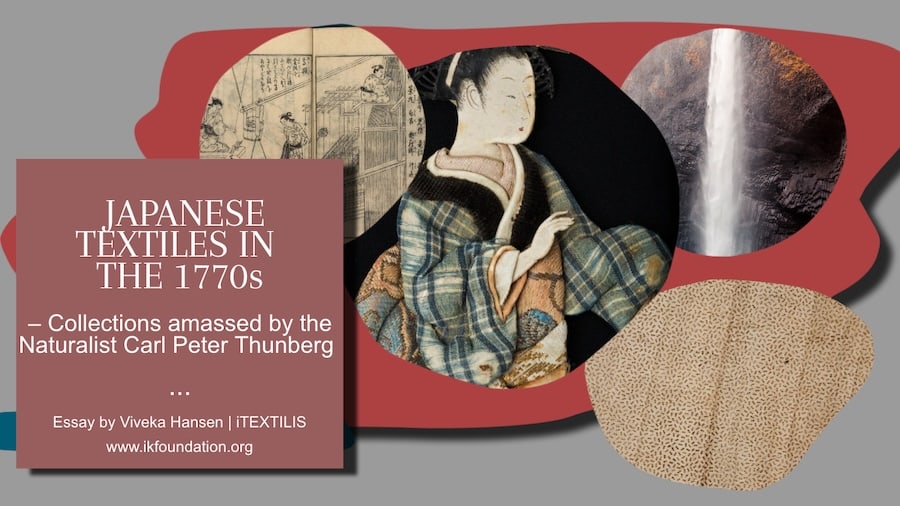
IN THE ESSAY ”JAPANESE TEXTILES IN THE 1770s – Collections amassed by the Naturalist Carl Peter Thunberg”. Viveka Hansen writes about Carl Peter Thunberg (1743–1828), renowned as one of Linnaeus’ most celebrated apostles, who embarked on a nine-year voyage in the 1770s, collecting vast treasures of natural history and ethnography. His extensive publications and collections cemented his legacy. This essay explores Thunberg’s lesser-known fascination with textiles — from Japanese silk weaving and paper cloth to traditional garments — while tracing his global journey and the cultural exchanges that shaped his scientific mission.
EXPLORE >>>
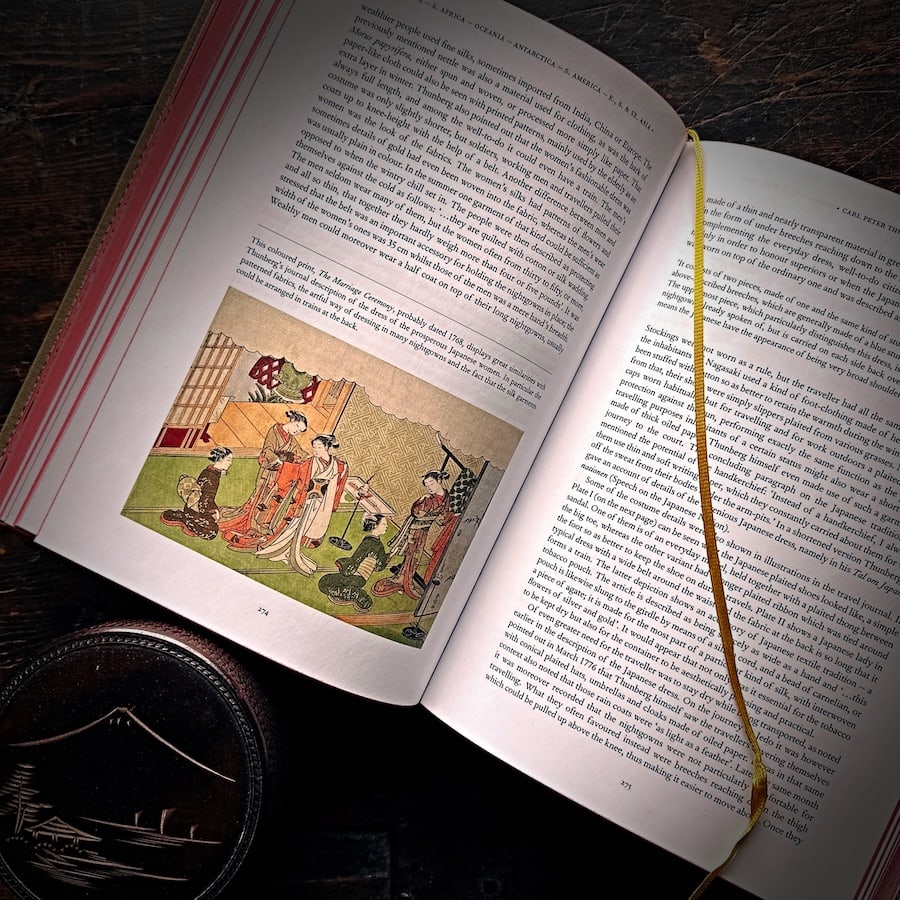
IN THE BOOK ”TEXTILIA LINNAEANA – Global 18th Century Textile Traditions & Trade”, Viveka Hansen has published many years of own research on the 18th century. Seventeen young naturalists — the Linnaeus Apostles — ventured to over fifty countries across all continents, commissioned by Linnaeus, academies, and trading companies. Some joined landmark expeditions, including James Cook’s voyages and the Danish mission to South Arabia.
Their journals, letters, and Linnaeus’ own writings reveal a rich record of global textile traditions: from wool production and indigo dyeing to the Silk Road’s luxury trade and the bustling ports of Cadiz, Batavia, and Canton, where fabrics, dyes, and linens changed hands. One chapter covers Carl Peter Thunberg's visit to Japan and includes unique observations on Japanese textile traditions. The 520-page book is available via BOOKS & ART.
EXPLORE >>>
|