
ikfoundation.org
The IK Foundation
Promoting Natural & Cultural History
Since 1988

- WELCOME
- THE IK WORKSHOP SOCIETY
- THE FIELD STATION LAB
- THE DONATION ROOM
- BOOKS & ART0


- CONTACT
iFellows Sign In
Find out more about becoming an iFellow...My Basket
Items: 0Total: €0.00

TEXTILE SUBSTITUTES AND ADDITIONS
– Useful Plant Fibres observed by Carl Linnaeus and other 18th-century Swedish Naturalists
ESSAYS No: CCXXV | August 3, 2026 | By Viveka Hansen
Despite the optimistic belief in the 18th century that anything seemed possible, no sources indicate that experimenting with cotton cultivation was ever undertaken in Sweden. The naturalist Carl Linnaeus (1707-1778) was one of the most influential individuals of his time within this mercantile spirit, which primarily aimed to promote the superiority of domestically produced goods, stressing above all the benefits for the domestic economy. Seeking new or additional textile materials and stuffing for bolsters, or fibres that could be spun, was no exception. However, in addition to the already widely grown flax and hemp, his and many contemporaries’ idea of replacing expensive imports with native species to benefit the home country's economy was not realised. This essay will look more closely at these textile possibilities, which were also intertwined with everyday life, self-sufficiency, basic needs, warmth and comfort, and clothing consumption.
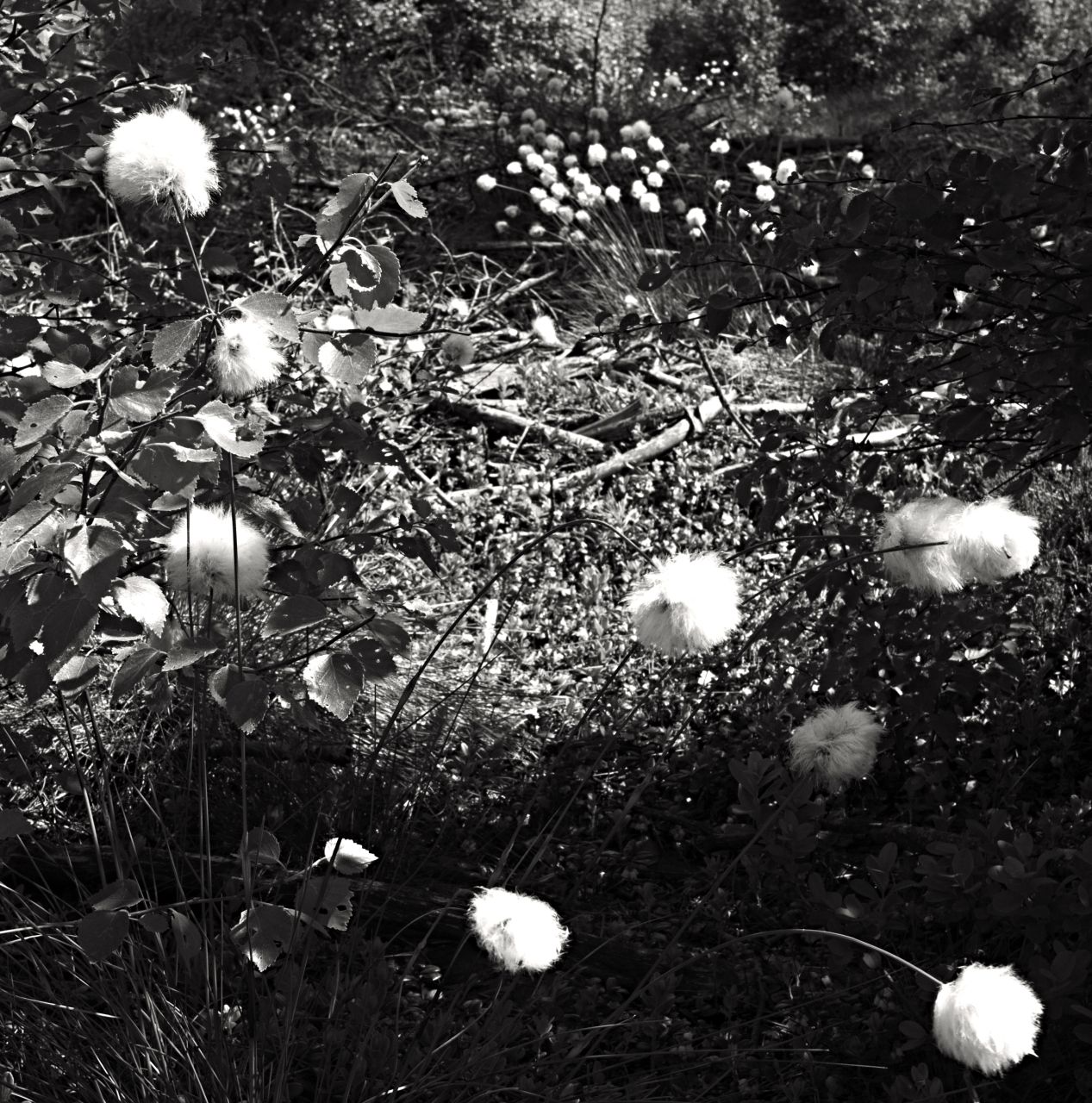 The material used to stuff bolsters and pads to make them soft and warm was a subject to which Carl Linnaeus often returned during his provincial tours in Sweden and in his botanical publications. One of the plants, Common cottongrass (Eriophorum augustifolium), was, for instance, recorded in Flora Oeconomica, printed in 1737 (44. Eriophorum); he noted: ‘Ängsull – the Down is used by the poor for stuffing pads and bolsters’. (Cottongrass, September in southern Sweden). Photo: The IK Foundation.
Between Skara and Göteborg on 10 October 1747, one of Linnaeus’ former students also mentioned the benefits of the same plant. On his way to North America, prior to leaving his home country, Pehr Kalm (1716-1779) noticed in his travel journal that the tussock cottongrass (of the same genus as common cotton grass) had become hairlike as hemp fibres, and noted further: ’Cotton-grass, this was found here in fairly great abundance, grew in tussocks and was of all plants the one that was most common here…Eriophorum [Eriophorum vaginatum L.]’
Raw cotton and its ready-woven fabrics were still costly import items during the 18th century, mainly used in prosperous homes for sheer curtains and clothes. But there was no shortage of domestic initiatives when it came to processing the imported cotton, as described by the writer, A Falén in his booklet, published in 1756, dealing with all the elements of the process: the raw material, the tools, the spinning school, how the spinners achieved their skills, wages paid for spinning, sorting of yarn, sales prices of yarn, etc. Cotton yarn was at the time spun in Stockholm as well as in the provinces and diligent spinners who within the period of three years managed to deliver ‘Three hundred skeins of yarn would enjoy a premium of Three Rixdollar copper coins…’
-806x1280.jpeg) Carl Linnaeus in 1740, at the age of 33, with his hands resting on Systema Naturae and the Linnea flower on display. Despite his elegant appearance, many of his household observations in floras and travel journals considered needs for the society as a whole – from wadding material in the poor people’s bedding to how luxury consumption could be produced domestically in Sweden. (Courtesy: Uppsala University Library, Alvin-record:85215. Engraving by Augustin Ehrensvärd, 1710-1772).
Carl Linnaeus in 1740, at the age of 33, with his hands resting on Systema Naturae and the Linnea flower on display. Despite his elegant appearance, many of his household observations in floras and travel journals considered needs for the society as a whole – from wadding material in the poor people’s bedding to how luxury consumption could be produced domestically in Sweden. (Courtesy: Uppsala University Library, Alvin-record:85215. Engraving by Augustin Ehrensvärd, 1710-1772).The notes, written in Linnaeus’ own hand, to do with cotton in all its forms are meagre, however, and mainly based on observations from the manufacture at Alingsås on 7 July 1746, where the warehouse contained ‘cotton, (fine, ordinary and coarse)’. He was in fact more interested in looking for domestic plant material which could replace cotton. The volume Flora Oeconomica states, for example (304): ‘Epilobium, Willowherb. The seed plume is proposed instead of Cotton. Mr Prob. Westbeck’. A similar note was made (792) regarding ‘Salix, Bay Willow. The down is proposed instead of cotton by Mr Prob. Westbeck’. Bay Willow also captivated the ever-observant Linnaeus in Uppland at the beginning of his Västergötland Journey 1746: ‘From the fruit of Bay Willow and Meadowsweet, or Solomon’s seal (Flor. 304), they collect the down or fluff with which the seeds fly and use them instead of Cotton. Should that cotton have the potential of becoming desirable, the area along the road towards Enköping ought to be enclosed; for Bay Willow grew there in great abundance.’ In his Skåne Journey, there is a report from the Lärkesholm estate on 25 July 1749 on the combination of cotton and bay willow: ‘The fluff was used along with cotton for stuffing quilts, but the down of the bay willow was declared useless by the colonel.’ Examining substitutes for the costly imported cotton was thought important within the framework of the self-sufficiency policy which reigned at the time.
![Other contemporaries also took an interest in the usage of the soft seed pods of bay willow and even went so far as to call the material “the Swedish cotton”. Sven Ljungqvist wrote for example in the Acts of the Royal Swedish Academy of Sciences in 1745, ‘The Wood-Wool growing on bay willow can very well be used for stuffing… But if it is to be spun or fulled, especially grass wool or the so-called Epilobium Wool [Willow herb], it is wholly needful that it be completely cleaned from its grass and seed which, with the help of a Person and this Machine, may provide a few pounds [in weight] per day, and it might well occur that the wool becomes clean and white as snow and soft as the finest silk.’ Both he and Johan Adolph Jernefelt demonstrated such a machine, depicted here from Jernefelt’s publication of 1747, where ‘the Swedish Cotton is cleaned from its seeds and other impurity…’ (Jernefelt…1747, Tab. I.).](https://www.ikfoundation.org/uploads/image/3-a-machine-1280x1175.jpg) Other contemporaries also took an interest in the usage of the soft seed pods of bay willow and even went so far as to call the material “the Swedish cotton”. Sven Ljungqvist wrote for example in the Acts of the Royal Swedish Academy of Sciences in 1745, ‘The Wood-Wool growing on bay willow can very well be used for stuffing… But if it is to be spun or fulled, especially grass wool or the so-called Epilobium Wool [Willow herb], it is wholly needful that it be completely cleaned from its grass and seed which, with the help of a Person and this Machine, may provide a few pounds [in weight] per day, and it might well occur that the wool becomes clean and white as snow and soft as the finest silk.’ Both he and Johan Adolph Jernefelt demonstrated such a machine, depicted here from Jernefelt’s publication of 1747, where ‘the Swedish Cotton is cleaned from its seeds and other impurity…’ (Jernefelt…1747, Tab. I.).
Other contemporaries also took an interest in the usage of the soft seed pods of bay willow and even went so far as to call the material “the Swedish cotton”. Sven Ljungqvist wrote for example in the Acts of the Royal Swedish Academy of Sciences in 1745, ‘The Wood-Wool growing on bay willow can very well be used for stuffing… But if it is to be spun or fulled, especially grass wool or the so-called Epilobium Wool [Willow herb], it is wholly needful that it be completely cleaned from its grass and seed which, with the help of a Person and this Machine, may provide a few pounds [in weight] per day, and it might well occur that the wool becomes clean and white as snow and soft as the finest silk.’ Both he and Johan Adolph Jernefelt demonstrated such a machine, depicted here from Jernefelt’s publication of 1747, where ‘the Swedish Cotton is cleaned from its seeds and other impurity…’ (Jernefelt…1747, Tab. I.).Another plant which was described as suitable as stuffing material was ‘Bulrush (reed-mace) – that poor people use for stuffing their bedclothes’ (Fl. Oec. 772 Typha). From Gotland, he mentioned in 1741 that the Gotlanders stuffed their bolsters with bulrush, which was softer than straw. Due to the hard times, there was a report from the same tour of an even more uncomfortable bed underlay: ‘Sedge lay in the beds here instead of straw, for the reason that the winter past they had to give to the cattle all the straw they could possibly scrape together’ (27 June). If one could not afford to buy, nor had access to, stuffing materials such as down or feather, there were alternatives to hand. It was in all probability hard work gathering bulrushes or cotton grass in the rounds. Straw was easier to find in larger quantities but worked less well as it was less efficient at retaining heat and sagged quickly. In coastal areas with eelgrass, that material appears to have been the universal remedy used for everything, from the stuffing of bolsters, as a roofing material, infilling in cracks in house buildings to fertilising the fields.
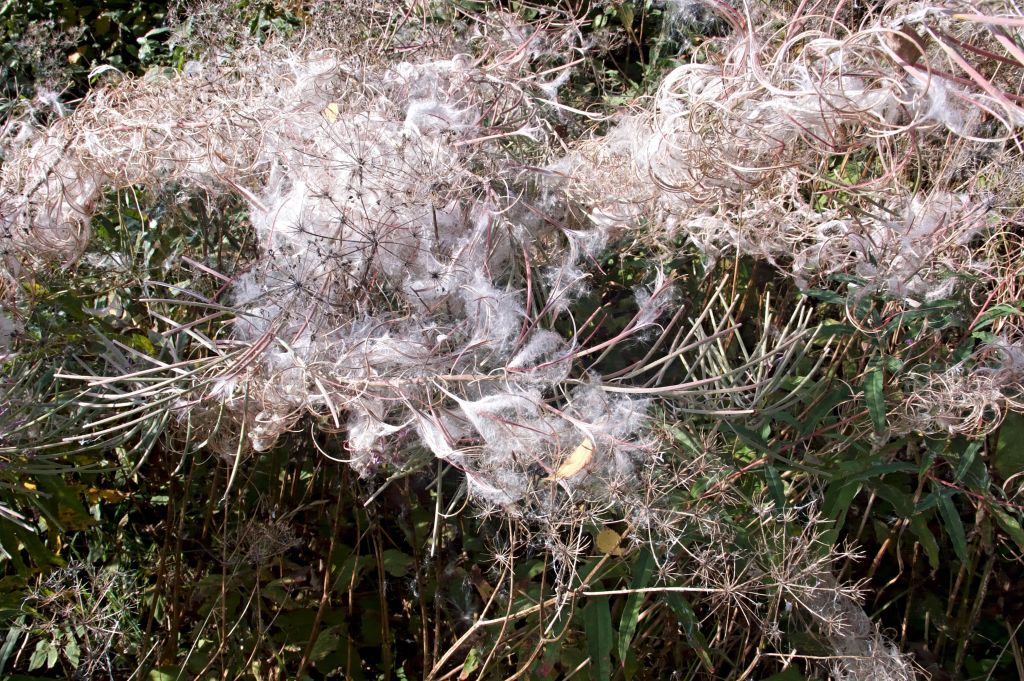 In this context, Gustav Westbeck is referred to by Linnaeus as Herr (Mr) Prob. Westbeck in Flora Oeconomica was another contemporary writer who, in two publications of 1744 and 1745, showed an interest in finding materials to replace cotton as wadding for clothes and stuffing for pads. One such was the cotton-like seed formations of the same willow herb (Epilobium augustifolium) which was described as follows: ‘Making wadding and stuffing from this wool is somewhat costly and the wool itself too refined and beautiful: nevertheless a small trial had been made here and found that it is equally as good as the best silk wadding… The Wool is problematic to the card using common Carding-combs for cotton; for as it is so much finer than other wool, so it requires that much finer carding-combs which one has not yet been able to obtain: but if one mixes in a little foreign Cotton, it allows itself to be well carded and spun…’ That is to say, the same “wool” described by Sven Ljungqvist as Epilobium Wool (see previous caption). It is doubtful, though, to what extent poor people found themselves having to use such stuffing material; the fluffy cotton-like material was certainly soft, but many hours of collecting yielded a minimal result. (Rosebay Willowherb (Epilobium angustifolium) in early September, Småland, Sweden). Photo: The IK Foundation.
There are further textile-related observations to be studied in Linnaeus’ publications. The common denominator for them all regarding materials was his constant search for new possibilities of producing textiles or of improving methods already known or yet again seeking out reasons for production problems. He proposed, for example, in his book Flora Oeconomica that hops could very well be used in a textile context (818): ‘Humulus, hops… If one chose to ret the stalks, they would serve for thread-like hemp’. It is hard to know for certain whether he ever made any attempts to produce thread from hops. The plant can in any case only with difficulty be prepared like flax and hemp, and the result is moreover poor. A plant which the botanist studied in the northern parts of Sweden was northerly aniseed, which was recognised from a long distance because of its nice smell. In Svensk flora (Swedish Flora) (1255) reads: ‘Inserted among textiles, it serves as moth repellent’. Finding suitable plants that could repel harmful insects from the store of cloth and clothes in the home was considered vital for protecting the costly textiles. Overall, Linnaeus’ philosophy was that everything in nature was for the usefulness of humankind if only the population would learn to make use of its resources in the right way. Only under such circumstances could the country consider itself becoming self-sufficient in textile materials.
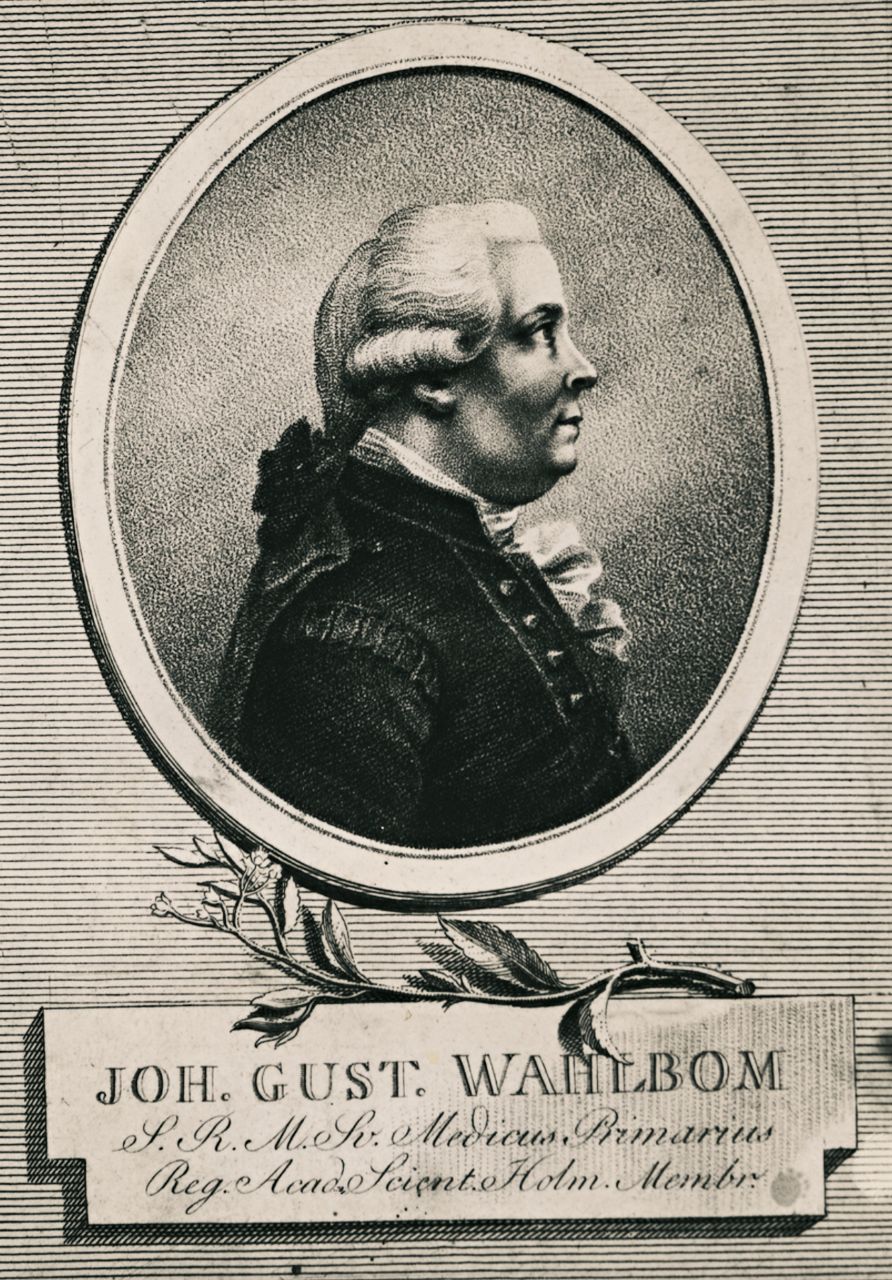 Many of Linnaeus' former students evidently wished to assist him in botanical matters which they knew were of interest to their former professor. One was Johan Gustaf Wahlbom (1724-1808), illustrated on a copper engraving by J.F. Martin in 1796. (Courtesy: Kalmar läns museum, KLMF.B01795. DigitaltMuseum).
Johan Gustaf Wahlbom made a scientific journey to the German lands in 1752-53, after his student years for Carl Linnaeus and the physician Nils Rosén von Rosenstein (1706-1773) at Uppsala University, where the student signed in 1744 and became a medical doctor in 1751. Wahlbom continued his working life as a provincial physician in Kalmar in southern Sweden, but besides his medical profession, he was also interested in natural history in general and improvement in farming methods. From his travels abroad, one letter – sent from Berlin on 27 February 1753 to Linnaeus – is particularly enlightening when it regarded the usefulness of common cotton grass or Eriophorum.
In translation from the Swedish letter, Wahlbom noted from a visit by the botanist and physician Johann Gottlieb Gleditsch (1714-1786): ‘… At Professor Gleditsch’s, I have seen both cloths of several sorts of fabric, and socks, made of Eriophorum or our Common cottongrass to which he mixed half as much or two-thirds of coarse and long wool. The result is really beautiful, so if Mr [Linnaeus] is interested, I will get more samples of these fabrics.’ However, the wording ‘more samples’ implies that the letter may have included one or several samples, but if so was the case, these are not extant today.
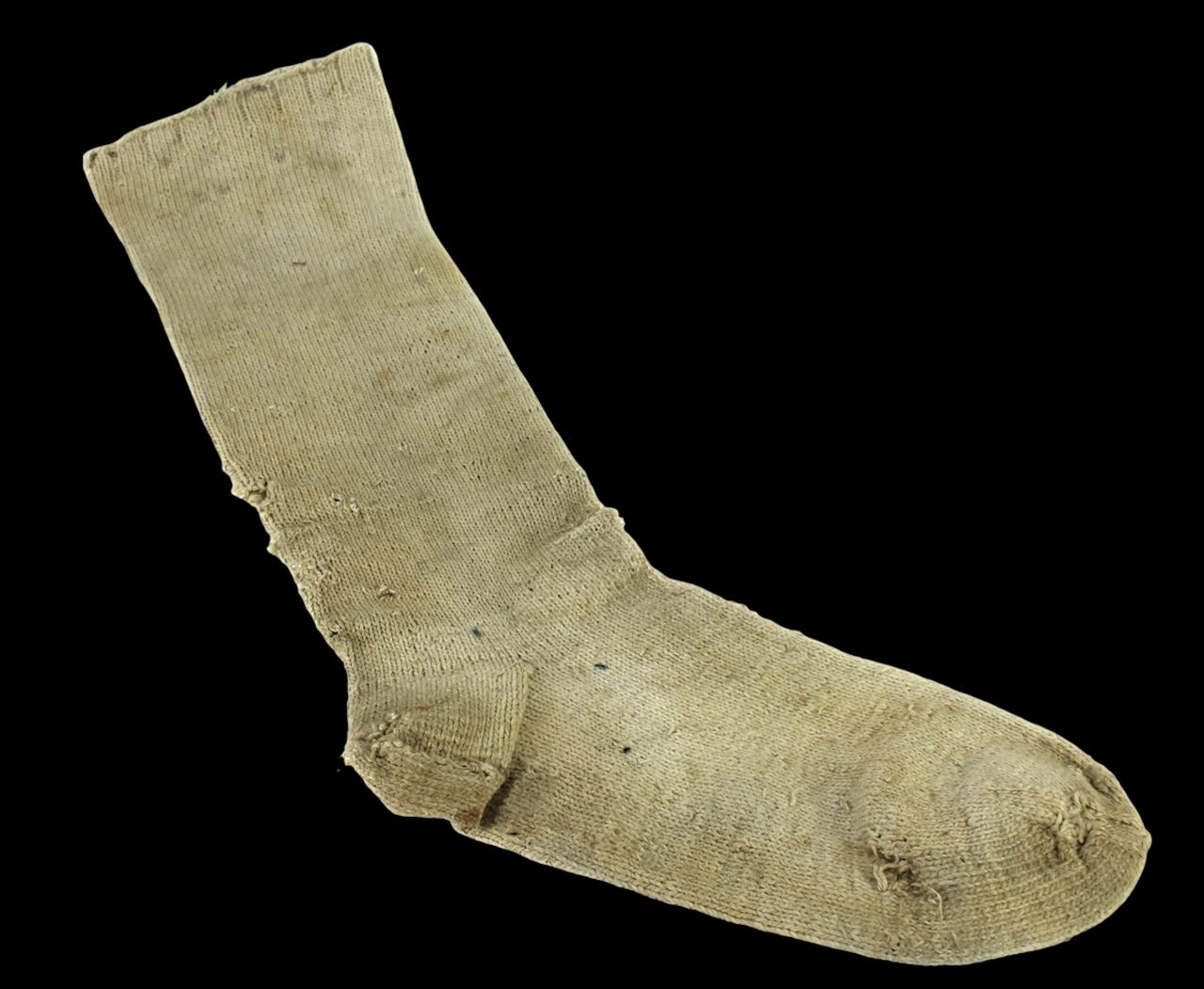 Compared to the German knitted sock quoted above, this illustrated cotton sock had been dated to circa the 1850s-60s in a farming community in central Sweden. It was a garment that had not been mixed with common cotton grass in the knitting process itself, but the leg was instead stuffed with common cotton grass for increased warmth. That is to say, another reason to be knowledgeable about the warming properties of this useful plant, which probably was known to people in Swedish provinces during the 18th century, too. (Courtesy: Länsmuseet Gävleborg, XLM.24681 Gästrikland province, Ovansjö district, Storvik parish. Digitalt Museum).
Lorens Wolter Rothof (1724-1787) was another of the many young students who took part in Carl Linnaeus’ botanical excursions in Uppsala during the 1740s, whilst in the coming decade, he became a lecturer at the Sheep-breeding farm School at Höjentorp and in Alingsås. In 1762, he also published a housekeeping dictionary, structured alphabetically from A-Ö. This was an extensive volume, counting 742 pages. The dictionary described everything used within the household in the minutest detail, often with references to earlier printed publications and Linnaeus’ provincial tours in particular. Almost a hundred subject names were related to natural dyes, textile raw materials, a wide selection of fabrics, laundry, sail cloths, feathers for bolsters etc. Interestingly the useful ‘Ängsull’ or common cottongrass, which was known as a useful plant under more than ten Swedish local names as well as in its Latin form. Four pages in the book were dedicated to this plant, where one small part described the ‘wool’ as follows: ‘The wool or white floss, which sits around the seed… when ripe, used to be picked by poor people to fill their bedclothes, but it is not particularly good, due to the fact that it gets matted. The grass in itself is useful for stuffing chairs and should even serve as bedclothes, at least in mattresses, because it does not become matted.’ Furthermore, he concludes with a wider outlook of the common cottongrass, which was used in Iceland for candle wicks, which, according to his sources, was even more admired than the cotton wicks.
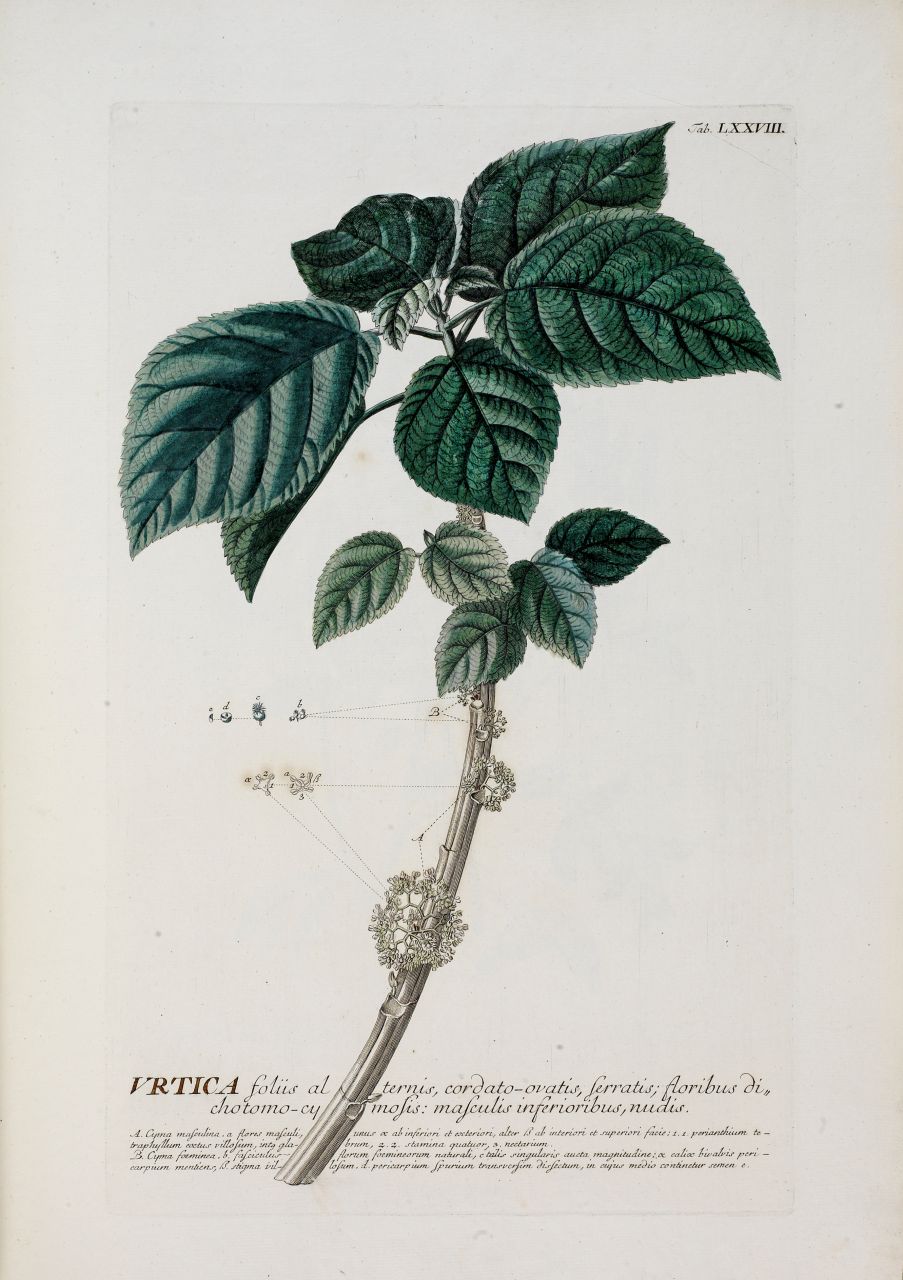 An alternative spinning material, among others, mentioned by Lorens Wolter Rothof, was the nettle, whilst he noted the following in his dictionary: ‘Nettles are told in the Journal Oeconomica for July month in 1751 to be useful to make paper of, which must refer to the burning nettles, which also can be spun and woven’. | Urtica [plate LXXVIII i Trew, Christoph Jakob, Plantae Selectae, 1750-1773 (Courtesy: Uppsala University Library, Sweden. Alvin-record 96222).
According to the extant journals of the Linnaeus Apostles, who visited over 50 countries across all continents from the 1740s to the 1790s, the nettle was significant as a textile raw material only in Russia and Japan at that time, although the species thrives in areas similar to those of flax and hemp, such as Sweden and other countries with similar or somewhat warmer climates. However, the nettle, which can be made into extremely fine, silky fabrics, was considerably harder to process into fibre than flax and hemp to achieve a good result, which is likely to have been reason enough for its limited use in Sweden in the 18th century.
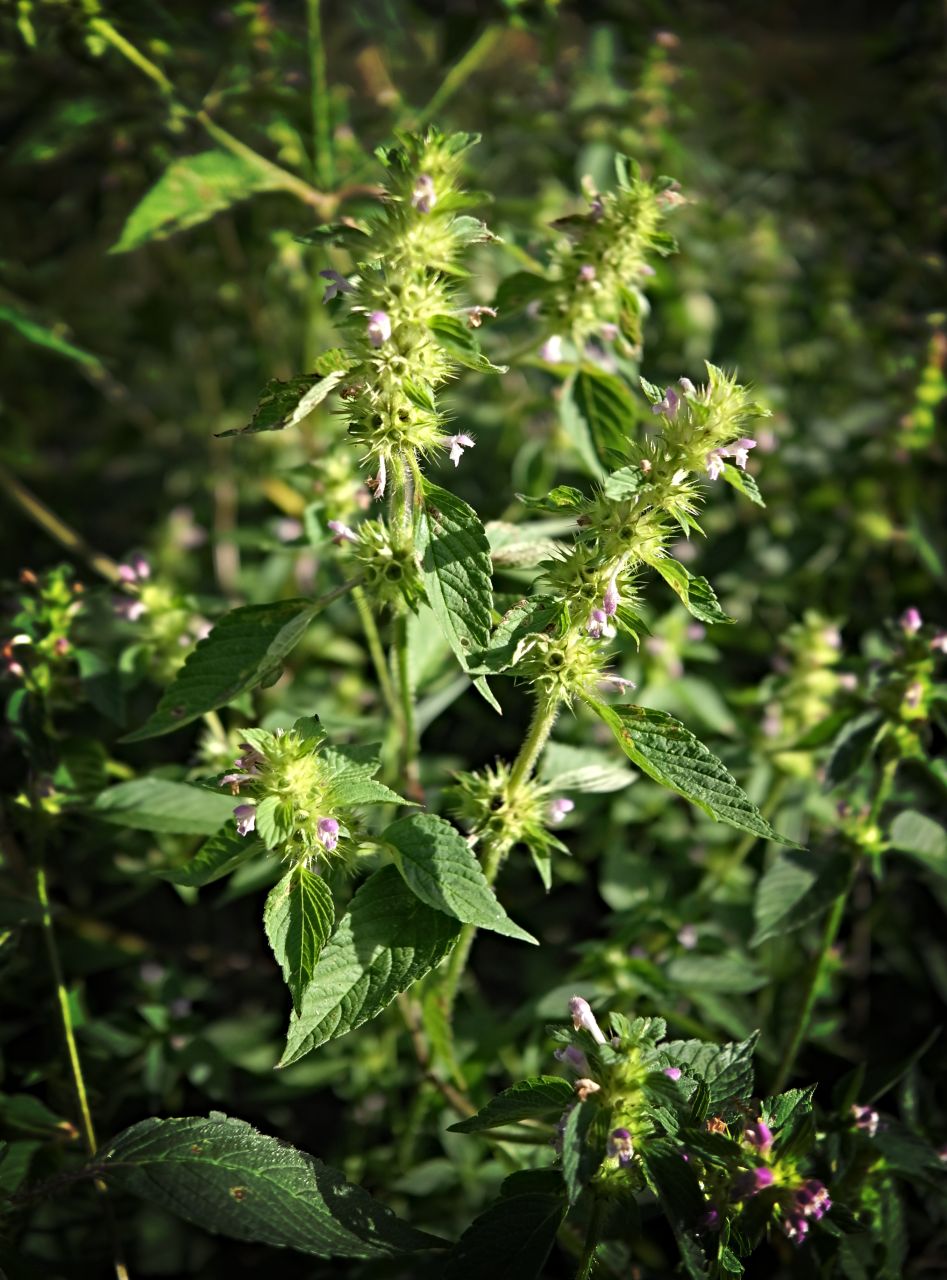 A final example of fibres used for spinning in 18th-century Sweden was Geleopsis tetrahit, hemp nettle, along with several other species in the same genus. However, even more so than the nettle, extracting and spinning the fibres of the hemp nettle’s stem was not without difficulty, yielding favourable results. Here, it is visualised in late July in Southern Sweden in flower. The plant was also mentioned by a few of Carl Linnaeus’ travelling apostles, but not in connection with textile uses. (Geleopsis tetrahit, in July 2026. Photo: Viveka Hansen, The IK Foundation).
 Sources:
- Falén, A., Bomullsspånadens arbetsdelar och handgrep, samt en spinneri idkares sysslor…, Stockholm 1756 (quote p. 21).
- Hansen, Lars, ed. The Linnaeus Apostles – Global Science & Adventure, London & Whitby 2012. [Pehr Kalm’s journal, Vol. Three].
- Hansen, Viveka, Textilia Linnaeana – Global 18th Century Textile Traditions & Trade, London 2017 (pp. 305-309 & 385-386).
- Jernefelt, Johan Adolph, Kort Beskrifning om Silkes och BomulsWadds beredande, så wäl af utlänsk som Svensk Bomull…, Stockholm 1747 (quote §2).
- Kalm, Pehr, Wästgötha och Bohusländska resa 1742, Stockholm 1977.
- Linnaeus, Carl, Flora Oeconomica 1737, Uppsala, facsimile 1971.
- Linnaeus, Carl, Wästgöta-resa…förrättad åhr 1746…, Stockholm 1747.
- Linnaeus, Carl, Skånska resa…, Stockholm 1751.
- Linnaeus, Carl, Flora Svecica, Stockholm 1755.
- Ljungqvist, Sven, ‘Hr. Directeuren Liungqvists påfund til den Svenska Bomullens Ränsning…’, Kungliga Vetenskaps Academiens Handlingar (KVAH), 1745, Jan. Febr. Mart., pp. 51-56.
- Nordisk Familjebok, volume 31, Stockholm 1905 (search word: Wahlbom, Johan Gustaf pp. 326-7).
- Rothof, Lorens Wolter, Hushålls-Magasin, Första Delen om Hushålls-ämnen Till Deras nytta, bruk och skada, beskrivne uti Oekonomiska Föreläsningar…, Skara 1762 (quote pp. 348 & 715).
- Uppsala University Library, Uppsala. (Quote in translation: Letter from Wahlbom to Linnaeus 1753, Alvin-record:225010. | Original letter at Linnean Society, London, XVI, 164).
- Westbeck, Gustav, Ytterligare underrättelse om en påfunnen twänne slags bomull, som ymnigt wäxer öfer hela riket…, Stockholm 1745 (quote p. 31).
More in Books & Art:
Essays
ISSN 2631-4746
The iTEXTILIS is a division of The IK Workshop Society – a global and unique forum for all those interested in Natural & Cultural History.
Open Access Essays by Textile Historian Viveka Hansen
Textile historian Viveka Hansen offers a collection of open-access essays, published under Creative Commons licenses and freely available to all. These essays weave together her latest research, previously published monographs, and earlier projects dating back to the late 1980s. Some essays include rare archival material — originally published in other languages — now translated into English for the first time. These texts reveal little-known aspects of textile history, previously accessible mainly to audiences in Northern Europe. Hansen’s work spans a rich range of topics: the global textile trade, material culture, cloth manufacturing, fashion history, natural dyeing techniques, and the fascinating world of early travelling naturalists — notably the “Linnaean network” — all examined through a global historical lens.
Help secure the future of open access at iTEXTILIS essays! Your donation will keep knowledge open, connected, and growing on this textile history resource.
For regular updates and to fully utilise iTEXTILIS' features, we recommend subscribing to our newsletter, iMESSENGER.
The iTEXTILIS is a division of The IK Workshop Society – a global and unique forum for all those interested in Natural & Cultural History.
Open Access Essays by Textile Historian Viveka Hansen
Textile historian Viveka Hansen offers a collection of open-access essays, published under Creative Commons licenses and freely available to all. These essays weave together her latest research, previously published monographs, and earlier projects dating back to the late 1980s. Some essays include rare archival material — originally published in other languages — now translated into English for the first time. These texts reveal little-known aspects of textile history, previously accessible mainly to audiences in Northern Europe. Hansen’s work spans a rich range of topics: the global textile trade, material culture, cloth manufacturing, fashion history, natural dyeing techniques, and the fascinating world of early travelling naturalists — notably the “Linnaean network” — all examined through a global historical lens.
Help secure the future of open access at iTEXTILIS essays! Your donation will keep knowledge open, connected, and growing on this textile history resource.
For regular updates and to fully utilise iTEXTILIS' features, we recommend subscribing to our newsletter, iMESSENGER.
The IK Foundation & Company Promoting Natural & Cultural History
|
Subscribe to our Newsletter | IK Global iMessenger |
Translate Page |



|
© The IK Foundation & Company 2026 - a truly European organisation since 1988 |
The IK
Workshop Society
Workshop Society
The Field
Station Lab
Station Lab
How to cite & Creative Commons
You are welcome to use the information and knowledge from
The IK Workshop Society, as long as you follow a few simple rules.
LEARN MORE & I AGREE
You are welcome to use the information and knowledge from
The IK Workshop Society, as long as you follow a few simple rules.
LEARN MORE & I AGREE
