
ikfoundation.org
The IK Foundation
Promoting Natural & Cultural History
Since 1988

- WELCOME
- THE IK WORKSHOP SOCIETY
- THE FIELD STATION LAB
- THE DONATION ROOM
- BOOKS & ART0


- CONTACT
iFellows Sign In
Find out more about becoming an iFellow...My Basket
Items: 0Total: €0.00
Home > The IKWS > iTextilis > THE STORY No. 13 | FIELDWORK – THE LINNAEAN WAY
How to cite & Creative Commons

THE STORY No. 13 | FIELDWORK – THE LINNAEAN WAY
Ambassadors and Consuls assisting the Linnaeus Apostles
ESSAYS No: CCXXVII | September 3, 2026 | By Viveka Hansen
This Essay is part of the long-term research and publicise project
THE STORY | FIELDWORK THE LINNAEAN WAY
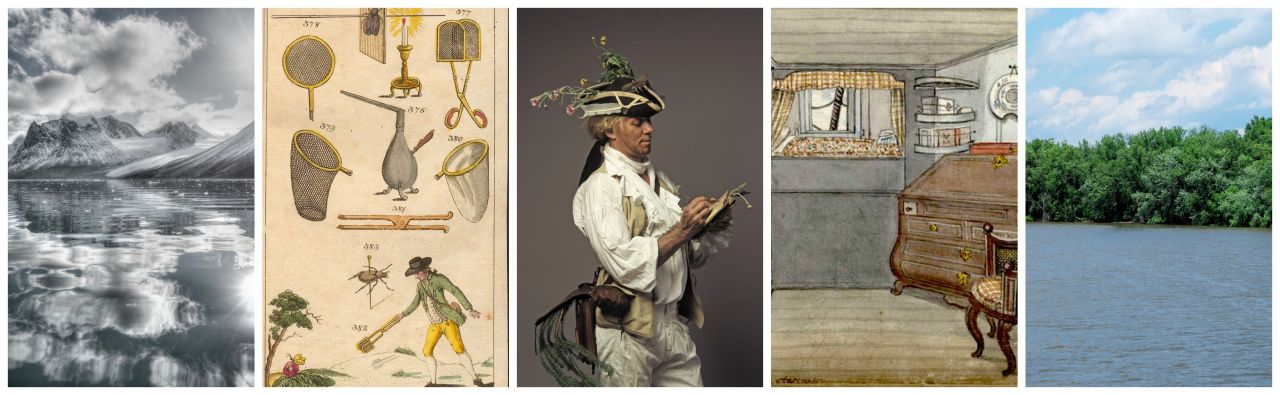 The global multidisciplinary project in Natural & Cultural History.
Five of Carl Linnaeus’ seventeen apostles referred to consuls or ambassadors in relation to textile materials. Fashions were one such subject, as were suitable or unsuitable clothing, textile gifts, transport in sumptuous palanquins, and other aspects of daily life. A few of the others provided additional details on such professional roles in the 18th century. Overall, the travellers who had the privilege of residing with consuls or ambassadors during their journeys mentioned the “good life” on many occasions. This was regarded not only as a privilege afforded by representatives of their home country but was equally often extended to officials from other European countries. Ambassadors, consuls, vice-consuls, Chargé d’affaires and envoys were more numerous than might be expected – all part of an intricate network of individuals stationed on several continents.
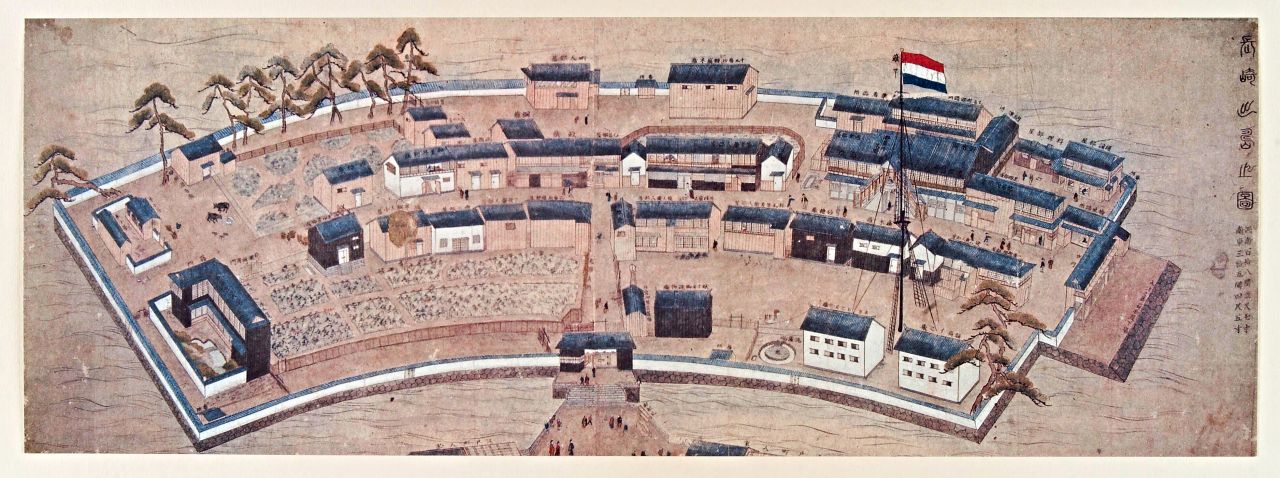 Island of Deshima/Dejima, Dutch East India Company, off Nagasaki – where the Linnaeus apostle and physician Carl Peter Thunberg (1743-1828) stayed during his time in the area during the 1770s. An undated 18th-century Japanese coloured drawing. (Courtesy: Wellcome Collection. Creative Commons).
Carl Peter Thunberg will initially be studied in greater detail. Together with the Dutch ambassador and a few other Europeans, Thunberg thus gained a broader perspective on Japanese society than most visitors. In March 1776, preparations were set in motion for his journey to Edo [today Tokyo] – from Nagasaki – which was to take place in so-called ‘Norimons’. Such palanquins were made of bamboo and were very spacious for the traveller, enabling them both to sit and lie down, while the chairs were carried by six to twelve porters depending on the traveller’s dignity. The elegant decor consisted of lacquered wood, but above all, the finest fabrics were to be had in the form of silk and velvet for the exterior decor. The Dutch East India Company would demonstrate its dignity and sound financial position in every possible way, leaving nothing to chance, and the well-orchestrated textile elegance was an important part of this effort to impress the Japanese. The purpose of the journey to the court was, of course, basically for the sake of economics. That is to say, the Dutch sought to improve their trading terms and conditions for goods desirable in the European market, or at least to maintain the then-current level.
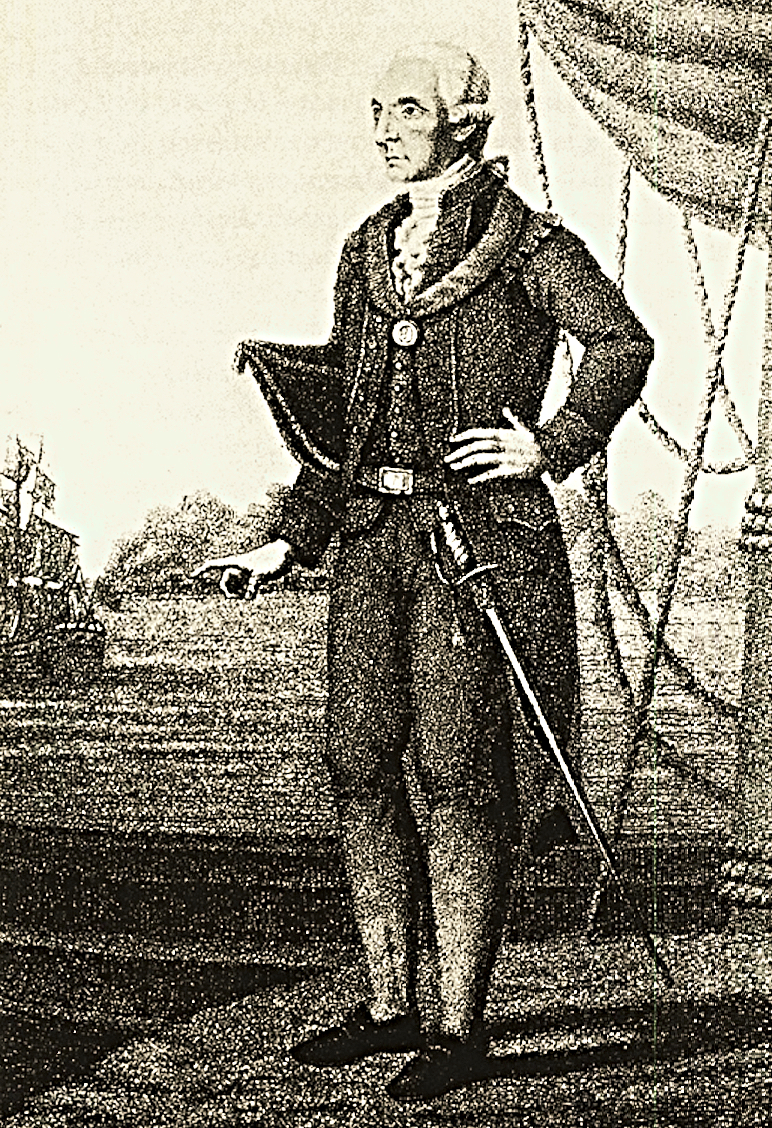 Carl Peter Thunberg was not only one of the apostles with the most frequent contacts with ambassadors; he also travelled as a ship’s doctor on Dutch East India Company ships in the 1770s, with a journey to Japan as the final goal – here depicted in the full-length figure of his visit together with the Dutch Ambassador et al. in Edo in 1776, dressed in a braided galloon dress with a sword. (Copperplate print of Carl Peter Thunberg in 1776).
The important journey to Edo undertaken by the Dutch ambassador, Thunberg, and the secretary, Mr Koehler, required extensive preparations. Bringing the correct presents to the most influential persons of the court was, for example, an essential prelude to good relations, described in February 1776 as follows in the journal: ‘This and the following days, the presents which we were to carry with us were prepared, consisting of cloths of different colours and qualities, chintzes and silks, with other articles.’ Those valuable gifts were packed in large chests, which, that they might not be left to the mercy of the winds and waves, were carried the whole way for the space of 320 miles.’ In addition to the three Europeans, the group consisted of approximately 200 Japanese people who were porters, waiters, translators, secretaries, and others. On that occasion, all persons of rank, such as officers, ambassadors and governors, were presented with costly gifts consisting of the finest conceivable silk nightgowns; the greater the number, the higher the ranking of the recipient. The number varied from two to ten gowns: Thunberg and the accompanying secretary received two; some were saved on behalf of the Company, while the Dutch ambassador was honoured with four gowns. All of the garments were made of the finest Japanese silk, ankle-length and with wide sleeves, in accordance with Japanese dress tradition. Besides, the plain or flowery silks were utterly exquisite, being quilted with either silk or cotton wadding.
This group of seventeen young men, former students of Carl Linnaeus (1707-1778), engaged in natural history undertakings to search for local specimens, identify trade opportunities that may be advantageous for their home country, and similar requests, was at times assisted by ambassadors and consuls. In-depth research, for this essay, into their journals and correspondence has revealed how such communications – often over long geographical distances – and complex interconnections were carried out and subsequently aided the travellers from various perspectives.
Financially
- Pehr Löfling (1729-1756): his journey was paid for by the Spanish Embassy and the Swedish East India Company.
- Fredrik Hasselquist (1722-1752): Consul Rydelius in Smyrna let him travel without expense.
Diplomatic means and relations in visited countries
- Göran Rothman (1739-1778): during travels in Tunisia and Libya, via the Swedish consul et al.
- Carl Peter Thunberg (1743-1828): during his stay in Japan, via the Dutch ambassador.
Comfortable living conditions, food and drink, musical entertainment, etc
- Göran Rothman in Tripoli.
- Peter Forsskål in the Turkish area.
- Fredrik Hasselquist in Smyrna.
- Carl Peter Thunberg in Japan.
- Pehr Osbeck (1723-1805) in Cádiz.
- Christopher Tärnström (1711-1746) in Cádiz.
- Daniel Solander (1733-1782) on Madeira.
Textile gifts, suitable or unsuitable clothing, etc
- Carl Peter Thunberg in Japan, detailed description of textile gifts, silk gowns etc.
- Peter Forsskål (1732-1763) looked at unsuitable clothing, and he was also dressed after local traditions in the Turkish area, and on such an occasion was denied entrance to the French consul’s house.
Keepers of collections during and after travels and travel companions
- Fredrik Hasselquist’s collections (part of) were kept by the Swedish Consul Anders Rydelius in Smyrna from 1752 when Hasselquist died. Mentioned by Peter Forsskål about 10 years later when he visited the same consul.
- Göran Rothman had the Danish and English consuls as travel companions on shorter journeys in Libya.
Security and paternal kindness
- Göran Rothman in Libya, consuls looked out and searched for him and his party when they did not return as expected.
- Fredrik Hasselquist: posthumously, Carl Linnaeus referred to the paternal kindness of the consul in Smyrna. They were all young men far away from home.
News and letters from Europe arrived via ships to consuls and ambassadors
- Important information of wars, a king’s death etc. (Göran Rothman and Fredrik Hasselquist).
Assistance in studies/local knowledge during the journeys, letters of recommendation, and friendship
- Göran Rothman was assisted by consulate officials in reading Roman inscriptions.
- Fredrik Hasselquist was indebted to the French consul for the opportunity to study a curiosa cabinet at the consul’s home and to receive letters of recommendation. Consuls often stayed long-term on their posts and acquired extensive local knowledge.
- Peter Forsskål was assisted by servants of the consul in Alexandria.
- Anders Sparrman (1748-1820), during his stays in Africa, compared information acquired by consuls in northern Africa.
Consuls assisted their own country’s merchants in trade
- Fredrik Hasselquist noted the French consul’s involvement in the textile trade in the eastern Mediterranean area.
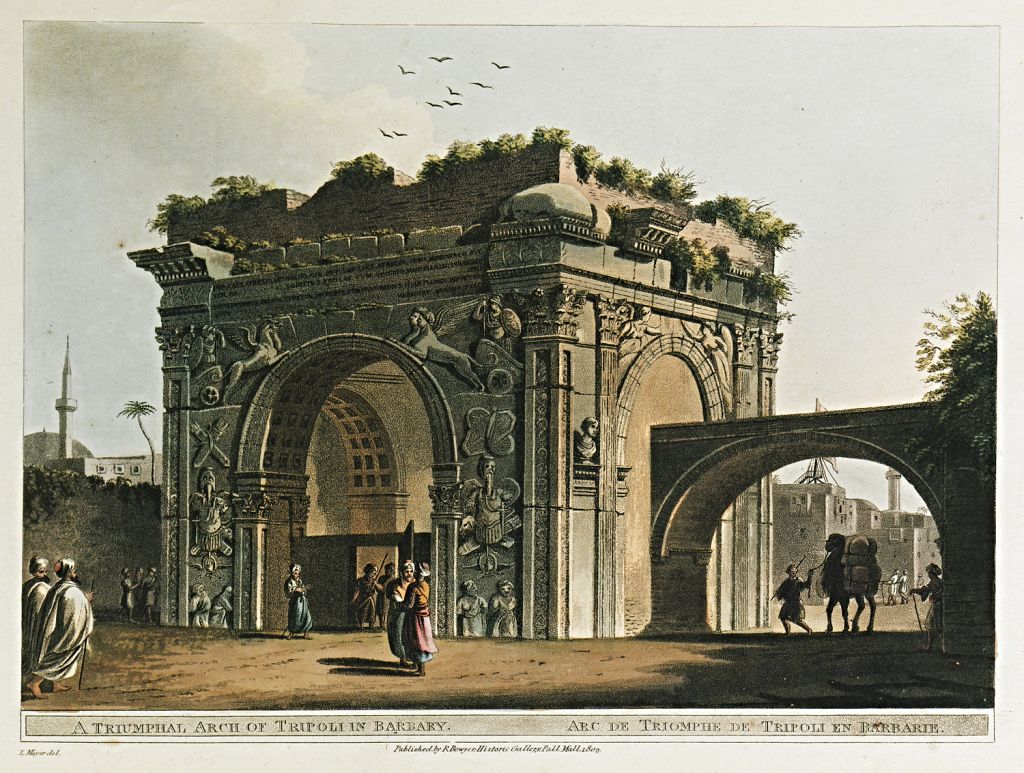 Göran Rothman visited Tripoli in the 1770s and described in correspondence after his return to Stockholm on 20 August 1776 how he made close-up studies of the ‘Arcus Romanus’, but he had some assistance. ‘I read the engraving in company with the literary Mr. Richard Tilly the chancellor of the English consulate and a young Comte de Ballovich a brother of the Venetian consul…’ (Quote: Hansen, L. ed., Volume Four, p 89. Image: ‘Luigi Mayer. Views in the Ottoman Dominions, in Europe in Asia, and some of the Mediterranean Islands, Λονδίνο, P. Bowyer, 1810’).
 Based on the multitude of perspectives stated above, Göran Rothman, who travelled in Tunisia and Libya from 1773 to 1776, was the apostle who was most dependent on envoys and consular assistance, including living quarters. He repeatedly noted all sorts of diplomatic matters between the countries in his journal and correspondence, which here will exemplify the important bonds between a naturalist far from home and consuls from several countries. The consuls in North Africa played an important role in this context by seeking, through diplomatic means, to negotiate favourable conditions for incoming travellers. Often, negotiations took place even before the voyages were undertaken, through itinerant emissaries sent to the respective countries involved. The emissary from Tripoli, Haggi Abdrachman, was for that purpose in Stockholm in 1773 and Rothman also introduced his journal with: ‘When the Tripolitanian envoy Haggi Abdrachman de Luna travelled back from Sweden at His Majesty the King’s and the Crown’s expense, some of the Royal Academy and Sciences Fellows were considering how an opportunity like this could be used to advantage and at less expense. Could they send a natural historian to Tripoli to describe and collect the produce of nature in this part of Barbary? It was discussed with the former consul in Tripoli, the late Mr. Christian Bagge, who promised to bring up the matter with Haggi Abrachman and find out if he was interested in such a proposition….’ Furthermore, Rothman’s extant correspondence gives information on these matters and his positive experiences from such contacts, particularly in a letter dated Tripoli, 31 December 1773, to Pehr Wargentin at the Royal Swedish Academy of Sciences. ‘…Our consul of this place, Mr Burgman, shows me all kindness and friendship that I could ever wish, and has absolutely not allowed me to stay anywhere other than in his house. The day after my arrival, I was also presented to the Bashaw, the Bey and the most distinguished public officers. The consuls of this place, namely the French, the English, the Danish, the Dutch and the Venetian, met me with all politeness, and I have consequently no lack of good and entertaining company.’
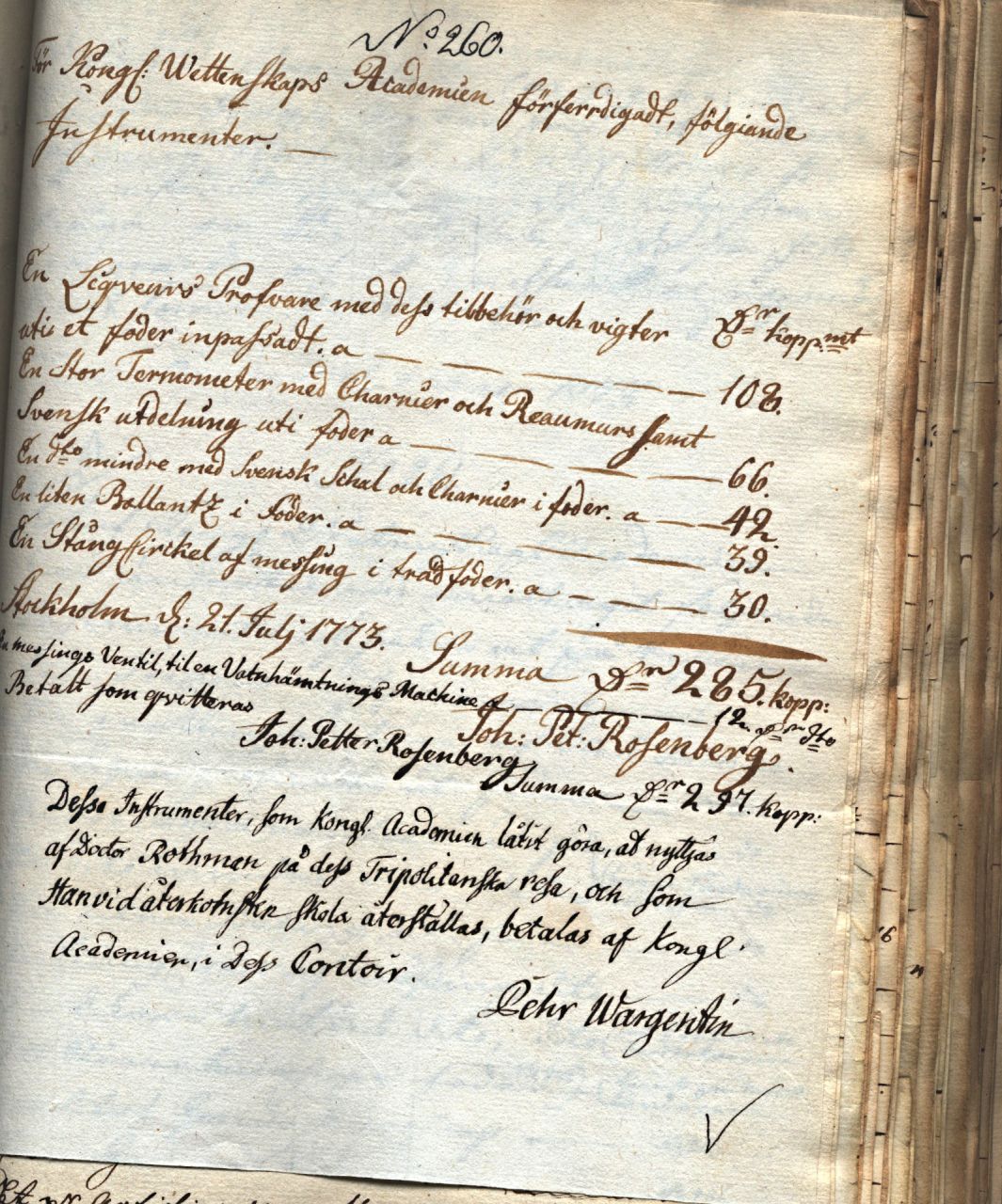 Prior to his voyage, Grant Rothman also got at least two receipts – preserved to the present – for instruments which ‘The Academy had made to be used by Dr. Rothman on his Tripolitanian journey, and which on his return he shall restore.’ This receipt was signed by Pehr Wargentin at the Royal Swedish Academy of Sciences. (Collection: Centrum för Vetenskapshistoria /Centre for History of Science, Stockholm, Sweden. Verification Book from the years 1772 and 1773, #260). Photo: The IK Foundation, London.
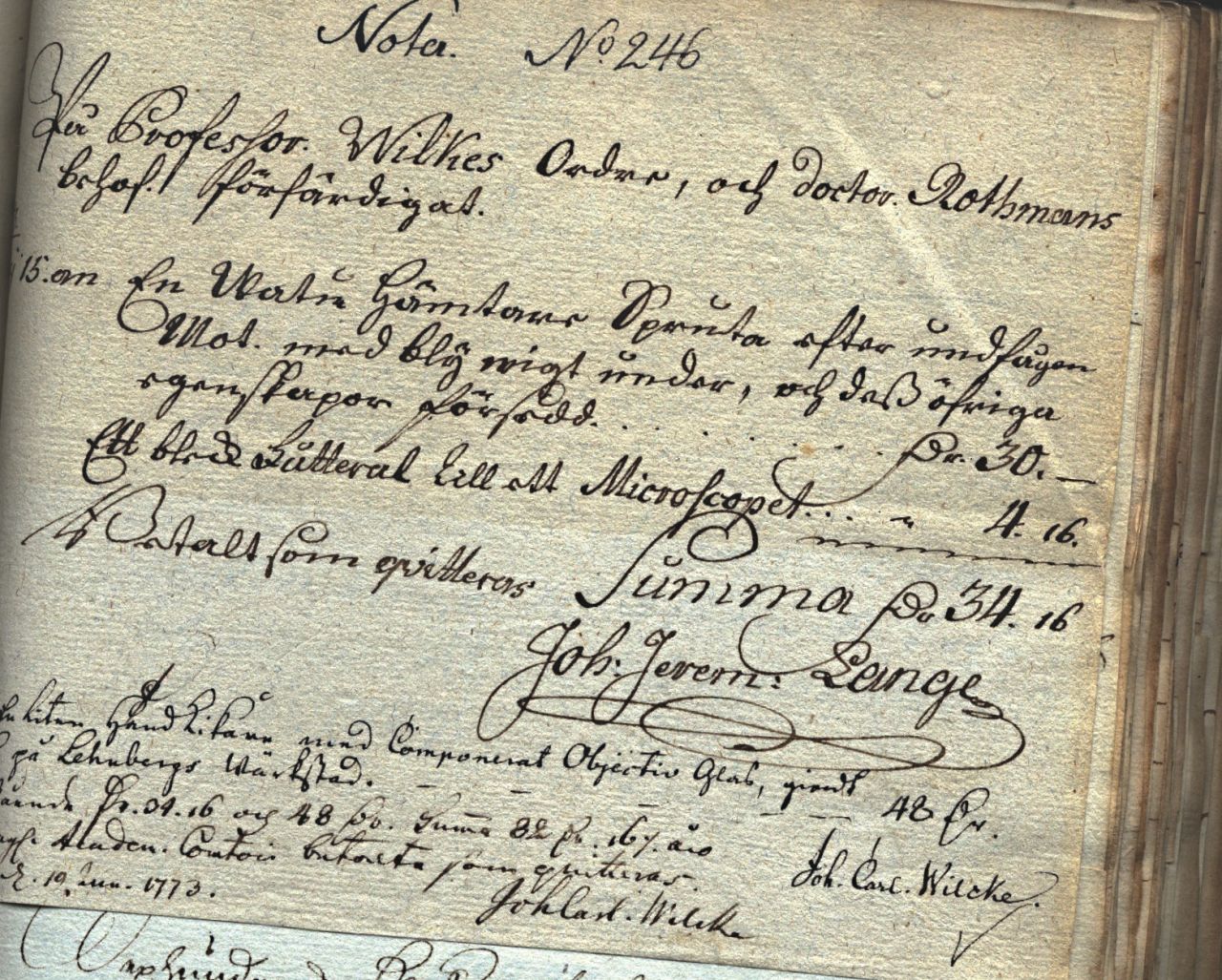 Followed by the second receipt for instruments used by Göran Rothman on his Tripolitanian journey in the 1770s. Just as the assistance of ambassadors and consuls, the opportunity to borrow vital equipment, like instruments, the personnel at the Swedish Royal Academy of Sciences was essential for the naturalists’ observations.(Collection: Centrum för Vetenskapshistoria /Centre for History of Science, Stockholm, Sweden. Verification Book from the years 1772 and 1773, #246). Photo: The IK Foundation, London.
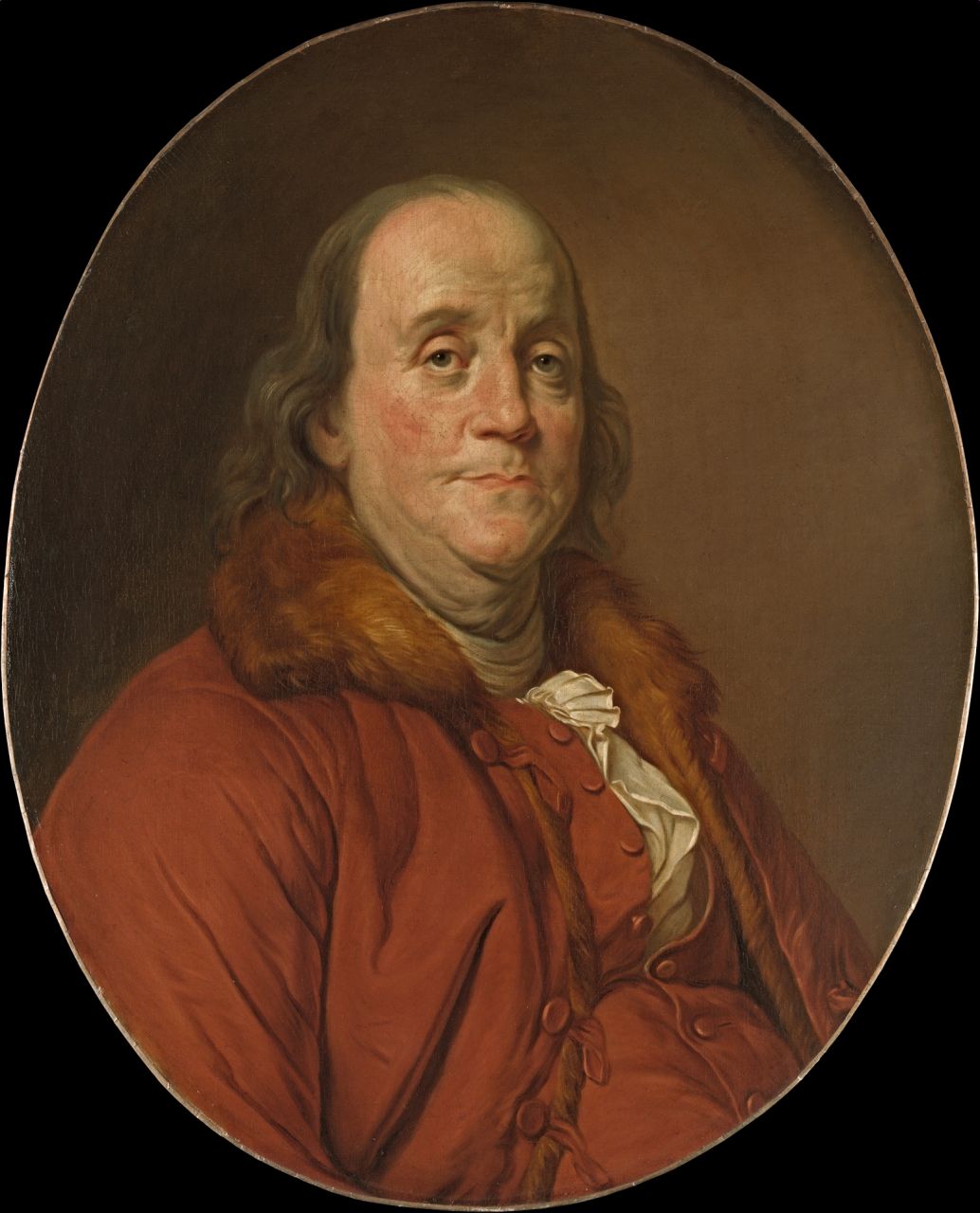 Replica of the portrait of the diplomat Benjamin Franklin exhibited at the Salon of 1779. Workshop of Joseph Siffred Duplessis, French, Carpentras (1725–1802), Versailles. (The Metropolitan Museum of Art, New York, USA. No. 95.21, online collection).
 Diplomatic representatives were regarded as distinguished from many perspectives, and their clothing was often no exception. These status indicators could include formal court dress or other luxurious fashions, and specially adapted uniforms gradually developed in the late 18th century. However, one individual within the extended Linnaean network clearly demonstrates other preferences or aims. The polymath Benjamin Franklin (1707-1790) preferred to dress in his usual manner during the long-term diplomatic mission in France from 1776 to 1785. Above, he was portrayed in 1778 in a fur-edged one-coloured suit – probably of wool – without a wig. During this ambassadorial period, Franklin was 70-79 years old, but his network of contacts remained extensive. Earlier in life, he had also been acquainted with at least two of the Linnaeus Apostles – Pehr Kalm (1716-1779) from the Swede’s stay in Philadelphia around 1750, and he had met Daniel Solander (1733-1782) during their concurrent stay in London during the 1760s and early 1770s. Perhaps Andreas Berlin (1746-1773), too, since he belonged to the same circle of natural historians by assisting Joseph Banks (1743-1720) and Solander during the early 1770s in London after their circumnavigation with James Cook.
Sources:
- Banks, Joseph, The Endeavour Journal of Joseph Banks – 1768-1771. Ed. J. C. Beaglehole, 2 vol., Sydney 1963.
- Centrum för Vetenskapshistoria /Centre for History of Science, Stockholm, Sweden. (Verification Book from the years 1772 and 1773).
- Goodwin, George, Benjamin Franklin in London – The British Life of America’s Founding Father, London 2016.
- Hansen, Lars, ed., The Linnaeus Apostles – Global Science & Adventure, eight volumes, London & Whitby, 2007-2012 (The journals of the Linnaeus Apostles & Quote from a letter, vol. four, p. 79).
- Hansen, Viveka, ed. (introduction, biography and transcription), ’Göran Rothman – Resa till Tripoli’, Svenska Linnésällskapets Årsskrift 2012, pp. 7-84.
- Hansen, Viveka, Textilia Linnaeana – Global 18th Century Textile Traditions & Trade, London 2017.
- Thunberg, Carl Peter, Travels in Europe, Africa and Asia, performed between the years 1770 and 1779. vol I-IV., London 1793-1795.
- Uppsala University Library et al. Alvin online (in-depth research of the correspondence of the seventeen Linnaeus Apostles).
Essays
ISSN 2631-4746
The iTEXTILIS is a division of The IK Workshop Society – a global and unique forum for all those interested in Natural & Cultural History.
Open Access Essays by Textile Historian Viveka Hansen
Textile historian Viveka Hansen offers a collection of open-access essays, published under Creative Commons licenses and freely available to all. These essays weave together her latest research, previously published monographs, and earlier projects dating back to the late 1980s. Some essays include rare archival material — originally published in other languages — now translated into English for the first time. These texts reveal little-known aspects of textile history, previously accessible mainly to audiences in Northern Europe. Hansen’s work spans a rich range of topics: the global textile trade, material culture, cloth manufacturing, fashion history, natural dyeing techniques, and the fascinating world of early travelling naturalists — notably the “Linnaean network” — all examined through a global historical lens.
Help secure the future of open access at iTEXTILIS essays! Your donation will keep knowledge open, connected, and growing on this textile history resource.
For regular updates and to fully utilise iTEXTILIS' features, we recommend subscribing to our newsletter, iMESSENGER.
The iTEXTILIS is a division of The IK Workshop Society – a global and unique forum for all those interested in Natural & Cultural History.
Open Access Essays by Textile Historian Viveka Hansen
Textile historian Viveka Hansen offers a collection of open-access essays, published under Creative Commons licenses and freely available to all. These essays weave together her latest research, previously published monographs, and earlier projects dating back to the late 1980s. Some essays include rare archival material — originally published in other languages — now translated into English for the first time. These texts reveal little-known aspects of textile history, previously accessible mainly to audiences in Northern Europe. Hansen’s work spans a rich range of topics: the global textile trade, material culture, cloth manufacturing, fashion history, natural dyeing techniques, and the fascinating world of early travelling naturalists — notably the “Linnaean network” — all examined through a global historical lens.
Help secure the future of open access at iTEXTILIS essays! Your donation will keep knowledge open, connected, and growing on this textile history resource.
For regular updates and to fully utilise iTEXTILIS' features, we recommend subscribing to our newsletter, iMESSENGER.
The IK Foundation & Company Promoting Natural & Cultural History
|
Subscribe to our Newsletter | IK Global iMessenger |
Translate Page |



|
© The IK Foundation & Company 2026 - a truly European organisation since 1988 |
The IK
Workshop Society
Workshop Society
The Field
Station Lab
Station Lab
How to cite & Creative Commons
You are welcome to use the information and knowledge from
The IK Workshop Society, as long as you follow a few simple rules.
LEARN MORE & I AGREE
You are welcome to use the information and knowledge from
The IK Workshop Society, as long as you follow a few simple rules.
LEARN MORE & I AGREE
