
ikfoundation.org
The IK Foundation
Promoting Natural & Cultural History
Since 1988

- WELCOME
- THE IK WORKSHOP SOCIETY
- THE FIELD STATION LAB
- THE DONATION ROOM
- BOOKS & ART0


- CONTACT
iFellows Sign In
Find out more about becoming an iFellow...My Basket
Items: 0Total: €0.00
Home > The IKWS > iTextilis > THE STORY No. 11 | FIELDWORK – THE LINNAEAN WAY
How to cite & Creative Commons

THE STORY No. 11 | FIELDWORK – THE LINNAEAN WAY
Knowledge Exchange of Natural History Specimens and Letters
ESSAYS No: CCXXI | May 18, 2026 | By Viveka Hansen
This Essay is part of the long-term research and publicise project
THE STORY | FIELDWORK THE LINNAEAN WAY
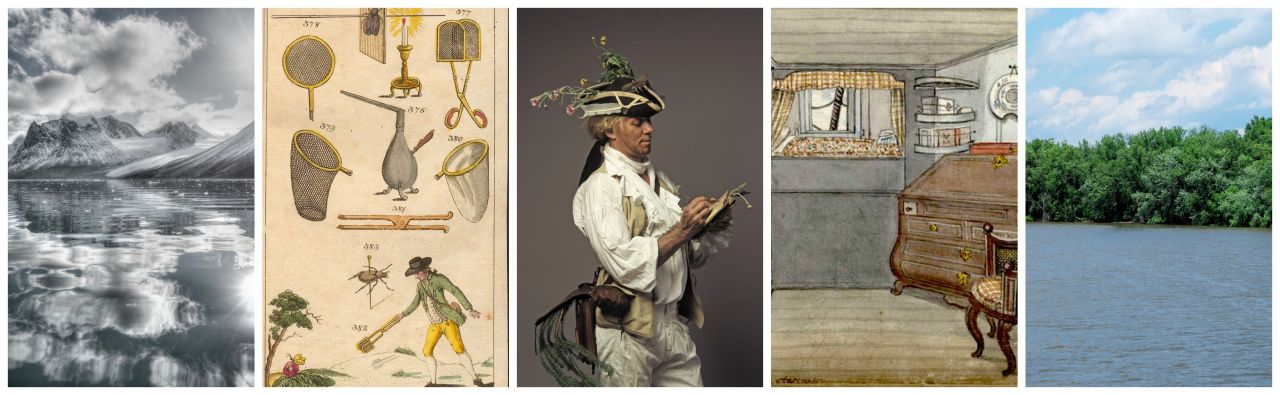 The global multidisciplinary project in Natural & Cultural History.
Extensive research over the centuries, up to the present, has documented plant collecting and the discovery of previously unknown specimens from the perspective of European and North American naturalists in the 18th century. Such exchanges of knowledge could fill an entire volume or even an encyclopaedia, but this essay will focus on practices for securely storing and sending natural history specimens and letters, as well as on observations of clothing and collection methods during fieldwork, offering further insights into the extended Linnaean network. However, an in-depth study of primary sources related to this group of naturalists has also revealed new informative evidence on these practical matters.
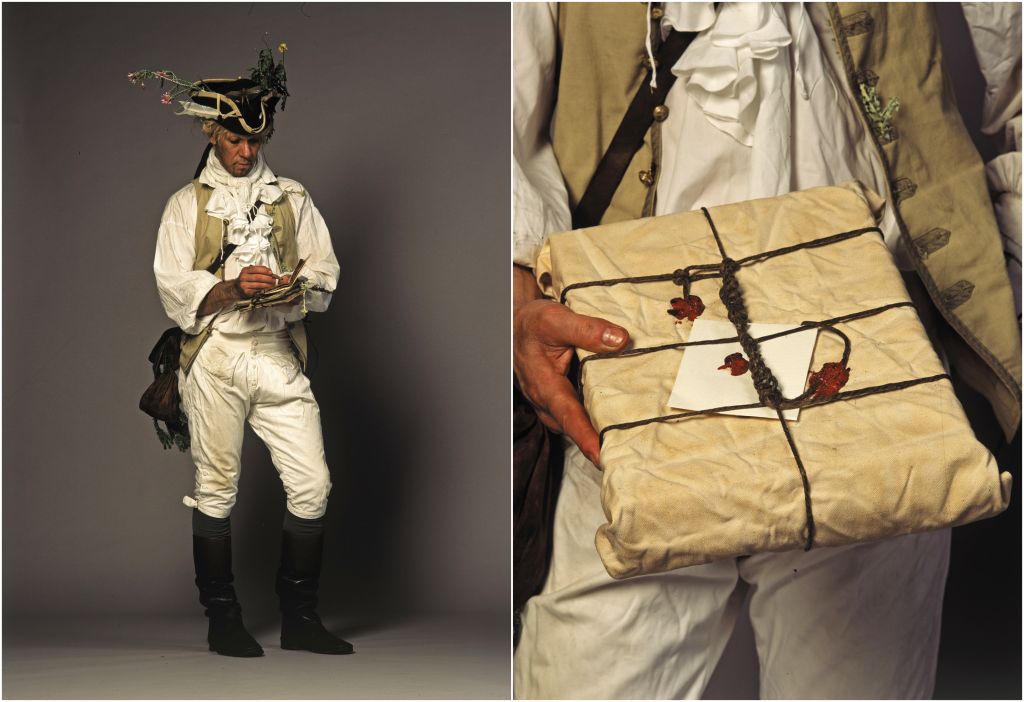 One useful fieldwork item was a container or leather bag suspended from a sturdy shoulder strap, used to collect small plants for later pressing. The naturalist and former student of Carl Linnaeus, Anders Sparrman, also wore a wide-brimmed hat during his journey in southern Africa in the 1770s, as in this reconstruction of an 18th-century botanist. Linen shirt with a ruffled front and pleated sleeves, waistcoat, and knee-breeches of linen. A simpler shirt, without a ruffled front, was another alternative, which must have been easier to keep clean and maintain in the field. Breeches, woollen stockings, sturdy shoes or boots, and a longer coat in bad weather. A difficulty most travellers experienced was that, for long periods, it was virtually impossible to buy cloth or ready-made garments in the remote places they visited. For a long-distance traveller like Sparrman, whose journey lasted for more than four years, it was common, prior to returning home, to send a parcel with minor specimens, seeds, and letters on a ship bound for the home country. (Reconstruction of field dress and a sealed parcel of linen canvas). Photo: Tony Sandin/The IK Foundation.
This extended Linnaean naturalist network can be exemplified by several individuals across a wide geographical area. The medical doctor Abraham Bäck (1713-1795) corresponded with the six-year-older Carl Linnaeus (1707-1778), particularly from 1740-45, during a similar European natural history study tour to the one Linnaeus had undertaken some years earlier. From London on 11 October 1742, Bäck reported on botanical news and mutual acquaintances like Peter Collinson (1694-1768), Mark Catesby (1683-1749) and Hans Sloane (1660-1753), as well as planning to send seeds. Earlier the same year, when staying in Leiden, he promised Linnaeus (13 February) that he would send the seeds he asked for and even a box with living flowers on the first thinkable ship to Stockholm, and he intended to ask somebody from the crew onboard to water the plants for a small reward. In a letter from Linnaeus to Carl Gustaf Ekeberg (1716-1784) on 17 September 1763, some illuminating details may be noted regarding the transport of plants and seeds over land, the risks of frost, and the associated costs. Summarised in translation from Swedish: Linnaeus asks whether it would be possible to find a pauper in Göteborg, such as a man from Västergötland, who could take the plants to Uppsala and ensure that they were indoors at night to avoid frost. The pots could be carefully taken so that the root lump remained intact, around which thick mosses should be bound, which would make it easier to carry and send. He offers to pay such a man 100 dalers for his trouble. Had he been rich, he would have offered one hundred times more, but his large family prevents that. It would be impossible to move them in pots unless the roots are properly enclosed in mosses, as the shaking of the wagon would loosen every grain of earth from around the roots, as occurred on the former occasion. Linnaeus is so worried that he again emphasises that these plants are priceless and that if someone is employed to transport them, the man must not continue his journey as long as there is still morning frost in the air. It would take 14 days to travel from Göteborg to Uppsala as it is about 50 miles; the man would get 100 dalers when the plants are delivered, that is 2 dalers per mile, which is fully sufficient for a farm labourer. Ekeberg, in his professional role as captain for the Swedish East India Company, more than once took home plants for Linnaeus and kept the specimens in Göteborg for some time before sending them overland. On this occasion, a much sought-after ‘tea tree’ etc. from the Cape, according to a letter written by Linnaeus in the previous month on 18 August.
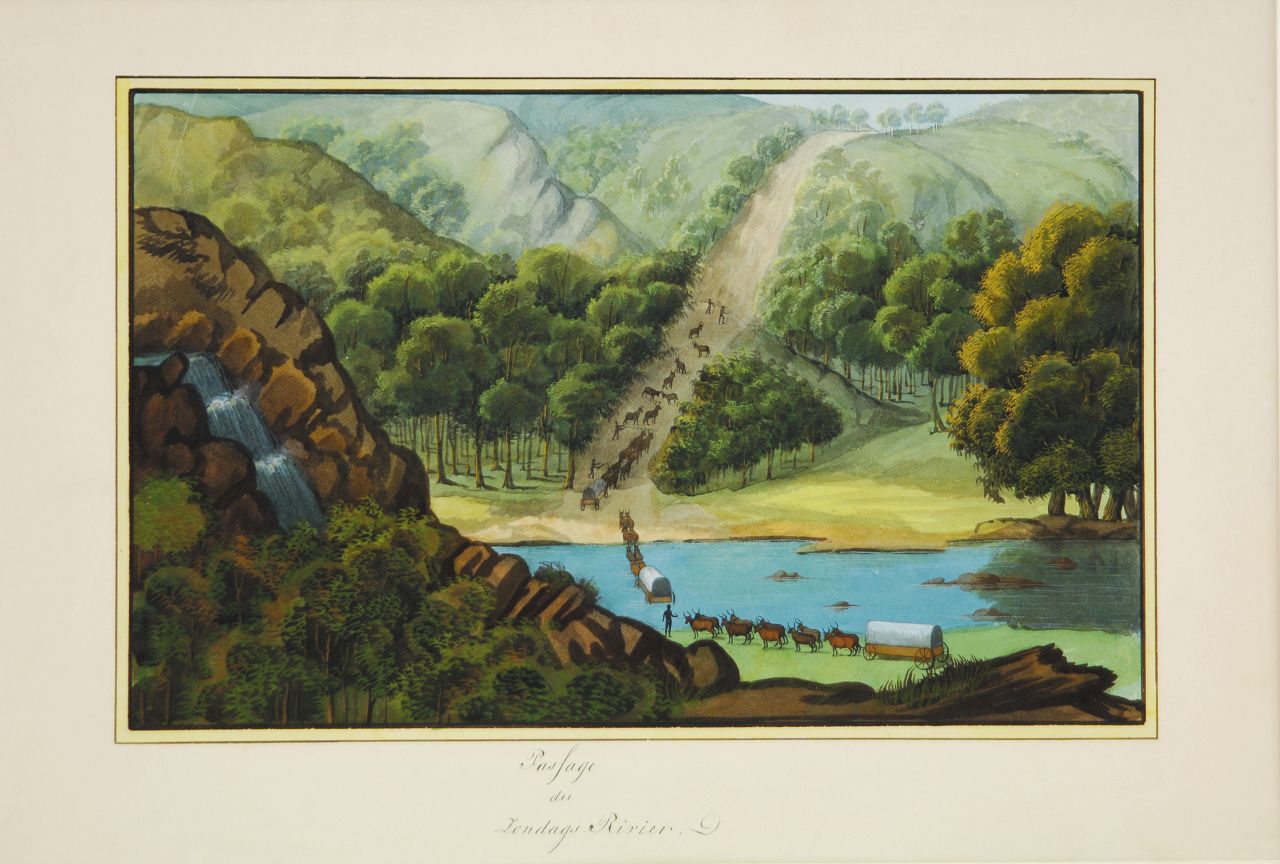 18th-century travel with oxen and a carriage in Africa, as illustrated in the travel journal of François Le Vaillant (1753-1824) in the 1780s. A French naturalist and zoological collector, Le Vaillant travelled with similar aims in southernmost Africa just a decade after two of the Linnaeus Apostles, Anders Sparrman (1748-1820) and Carl Peter Thunberg (1743-1828). This illustration offers an interesting perspective on one of the many challenges posed by steep hills for land transport, before any specimens or other collections reached a harbour town to be loaded onto a ship bound for Europe. (Collection: The Library of Parliament, Cape Town, South Africa).
Sending specimens over land or, in particular, with ships was mentioned quite frequently in the naturalist network, but patience often shines through in the letters. It was not only the time-consuming transports themselves; the long, hard winters added further waiting times, which, to some degree, must have been expected. This matter was noted in a letter (31 Dec 1756) to Linnaeus from the naturalist Thomas Pennant (1726-1798), as he eagerly awaited the spring, when he expected to receive Linnaeus’ posted box. He asked him to send the name of the ship and its captain so that he could ask for the box from a merchant in London. In his next one (8 April 1757), after receiving an answer, he asked him to send the box with minerals etc, to ‘T. Pennant Esq. at Mr Richard Jones at the Searchers’ office, Custom House, London.’ Additionally, the 30-year-old Pennant thanked Linnaeus for being elected a member of the Royal Society of Sciences at Uppsala. His interest in keeping up a correspondence with the young man seems to have developed in the autumn of 1756, after Pennant’s discovery of a new Concha, which he had received in a collection of marine plants from Norway, which, according to Linnaeus in the letter of 3 December, would be worth 1,000 ducats’. The exchange of knowledge was often of crucial importance from both scientific and financially marketable perspectives. During the first half of the 1770s, their correspondence became regular again, primarily including matters about the former Linnaeus student Daniel Solander’s (1733-1782) reluctance to answer Linnaeus’ letters, the voyage to Iceland in 1772 and Pennant’s forthcoming book A Tour in Scotland, and Voyage to the Hebrides 1772. It may also be noted that a respondent often sent a new letter straight away upon receiving it from Linnaeus, but as he himself had a larger network than most, it often took him longer to respond.
Overall, in letters sent to Linnaeus, one of several aims from the sender often seems to have been to increase the personal presence within natural history and, over time, to be more successful, not seldom in decade-long correspondence. Such an exchange could include the sending of one’s treasured observations of pressed specimens, seeds wrapped up in reused pieces of paper with written collection data or seeds and insects placed in suitable boxes, and in return, receive letters of recommendation and hopefully be honoured by the famous naturalist and be elected a fellow of one of the learned societies in Europe.
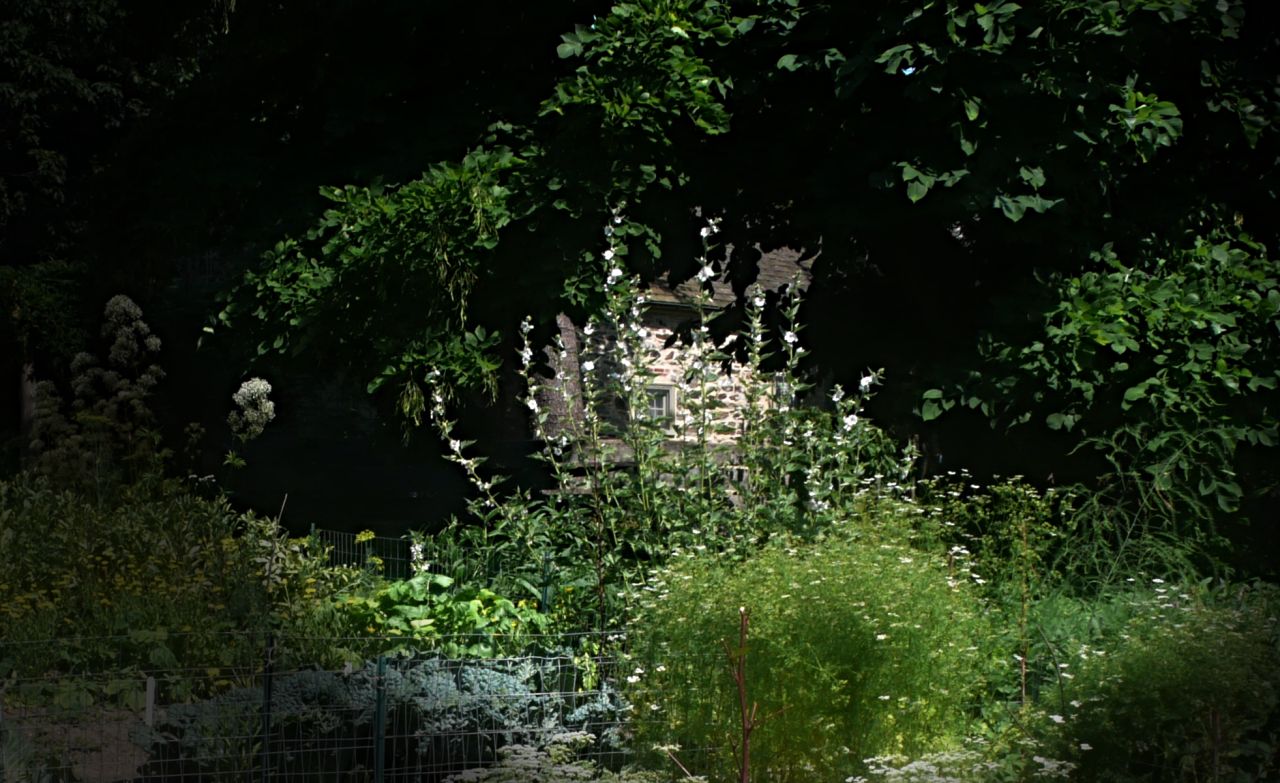 This photograph shows parts of the reconstructed Bartram’s Garden in Philadelphia, which focuses on Native American plants cultivated by several generations of the family from about 1728 to 1850, and was visited here in July 2014. (Photo: Lars Hansen, The IK Foundation, London).
 Being tenacious and patient was necessary, but also using waiting time in a constructive way, for example, to preserve collections and write letters, but also to rest and keep healthy. Even though Peter Collinson in London corresponded with his friend John Bartram (1699-1777) over several decades, Bartram also, over the years, expanded their trading network with interested parties in the North American colonies. From a business perspective, this must have been favourable, as it was so much quicker to transport by cart, river boat or coastal ships than over the Atlantic Ocean. An increasing number of specimens and seeds could be delivered annually. It was easier to pack for shorter distances, and there was a greater chance that plants and seeds alike would thrive.
The American Philosophical Society in Philadelphia, founded in 1743 by John Bartram and Benjamin Franklin (1706-1790), may also have contributed to the increasing interest in Bartram’s network of individuals in the colonies. It is also enlightening to note that slow payments – even for 18th-century standards – were not unusual. As an example, in a letter from Collinson on 22 March in 1751: ‘Thy bill of £60 is paid – remember when thou draws next year draw in 20 or 25£ bills a Month or Six weeks Distance Each – for then I have time & the last pretence summons those that have not paid – to pay their arrears our Gentry &c are but slow & I have so many things to think on that I forget…’. Parcels, boxes and letters sent by ships between Philadelphia and London seem to have reached their destination within a few months to half a year – the winter being the main obstacle – but with other European countries, it could be much slower. During the 1750s and 1760s, Collinson increasingly engaged with gardeners, manor house owners, et al. in England who took up orders; that is to say, he acted more and more frequently as an intermediary between Bartram and the final customer. Bartram, at times, also acted as an intermediary in America before seeds, etc., were sent on to Collinson, thereby strengthening connections between individuals. An example of this was mentioned in a letter to Collinson on 8 November 1761: ‘…I have just received two fine Cargoes of fresh plants from South Carolina from two different Correspondents …’ John Bartram’s correspondence and cooperation with Peter Collinson continued for more than thirty years – 1735 to Collinson’s death in 1768.
Even if no period in history is stagnant, in general, there were few major changes during this period in regard to the transport of goods between Philadelphia and London: similar types of ships were in use, and boxes, bottles and other containers were of similar style and wars (not even the Seven Years War between 1756 and 1763) seem to have affected their trading in any significant ways. Pennsylvania was one of the British colonies in North America, and a pre-industrial era and 18th-century “spirit” was constantly present in its scientific circles. From a present-day perspective, whilst looking back at primary sources, many aspects of everyday life seem quite similar across the period (the 1730s-60s). However, science and culture were in a developing phase; for instance, in London, the founding of a Subscription Library in 1740, the opening of Ranelagh Gardens in 1742, the Royal Society of Arts in 1754, the British Museum in 1759, the Royal Academy in 1768 and several hospitals were opened during this period. Equally, in Philadelphia, a postal service was introduced by Benjamin Franklin in 1737; the American Philosophical Society was founded in 1743; and, in the 1750s, Independence Hall and the Academy and Colleges were established in 1751. Philadelphia also grew to become a city during this period. John Bartram continued his natural history work up to the year he died in 1777, with correspondence to friends and colleagues in North America and Europe – he also had the assistance of his sons in collecting work, over a long period of time.
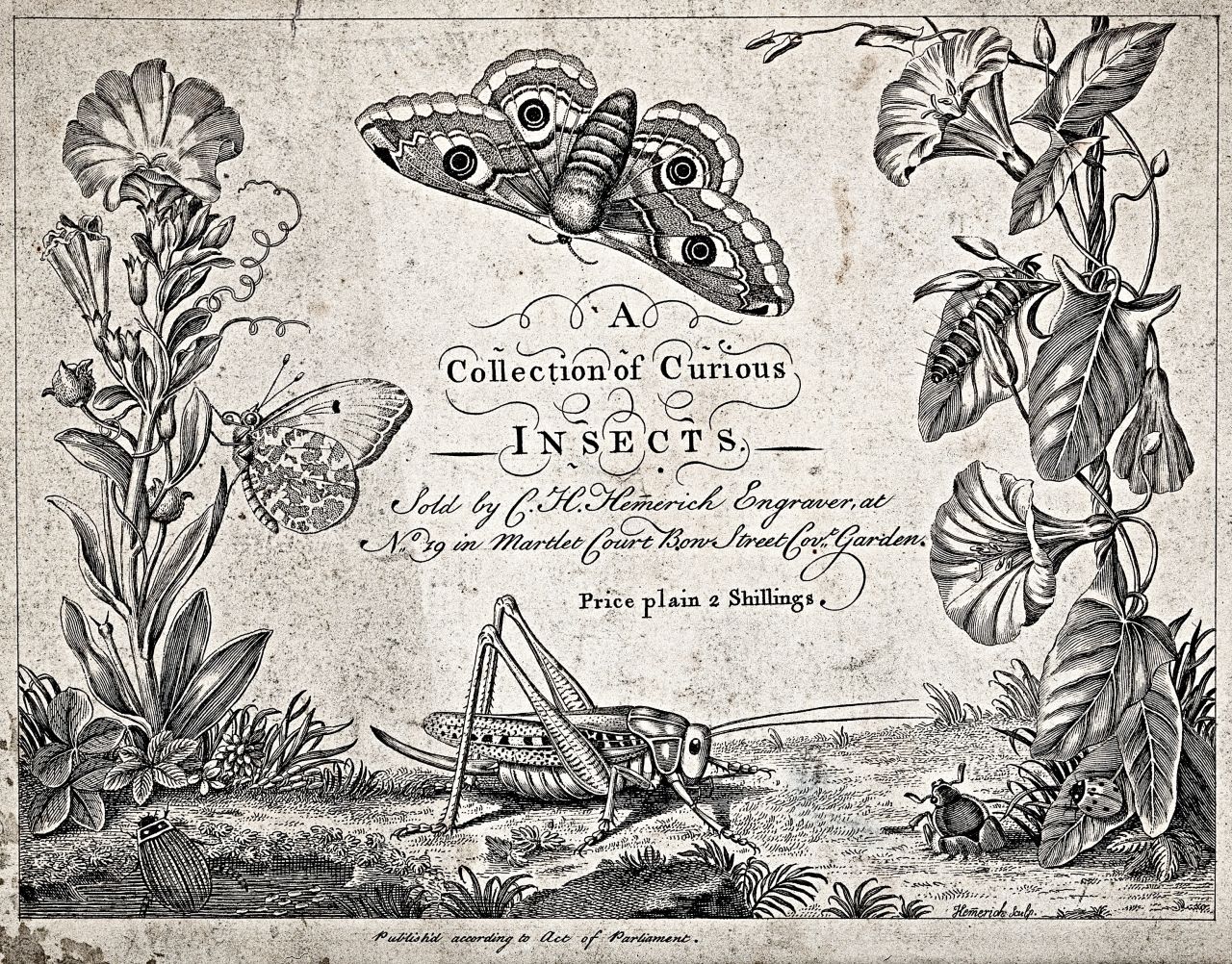 Engravings of insects and plants were sold for use as frontispieces in forthcoming natural history publications and, probably, as beautiful or educational framed prints for the interested general public. This trade card, dating 1759, is a rare example of the practice, sold for ‘2 Shillings’ via the engraver C.H. Hemerich, located at ‘No 19 in Martlet Court, Bow Street, Covent Garden.’ Furthermore, he was contemporary with several individuals in the Linnaean network who either lived in London, stayed in the city for extended periods, or made brief visits around this time. Maybe some of them had knowledge of this engraver’s shop! Overall, interest in suitable or accurate natural history illustrations was high during this era of categorisation, and the trading of such illustrations provides additional evidence that popular prints were often reused and multiplied for whatever purpose or wish the buyer had. (Courtesy: Wellcome Images, Public Domain).
Correspondence, travel journals and other documents are rich in informative details about their daily lives, successes and obstacles linked to descriptions of natural history rarities – either to look out for as a task described in their instruction or via random encounters within botany or zoology. Discovery, mystery, and the desire to collect exotic, endemic plants in impassable tropical forests and hot desert landscapes were often part of field naturalists’ passionate interests in these uncharted lands. This craze for new scientific knowledge, combined with the hope of a comfortable future income and pure curiosity about the luxuriant biodiversity they often encountered, was a welcome novelty for most field naturalists. Not seldom, they had the advantage of being assisted by local guides with local knowledge. Furthermore, artistic illustrations produced during fieldwork, together with accumulated detailed knowledge recorded in writing, were sometimes reused or replicated by subsequent travellers who visited the same areas.
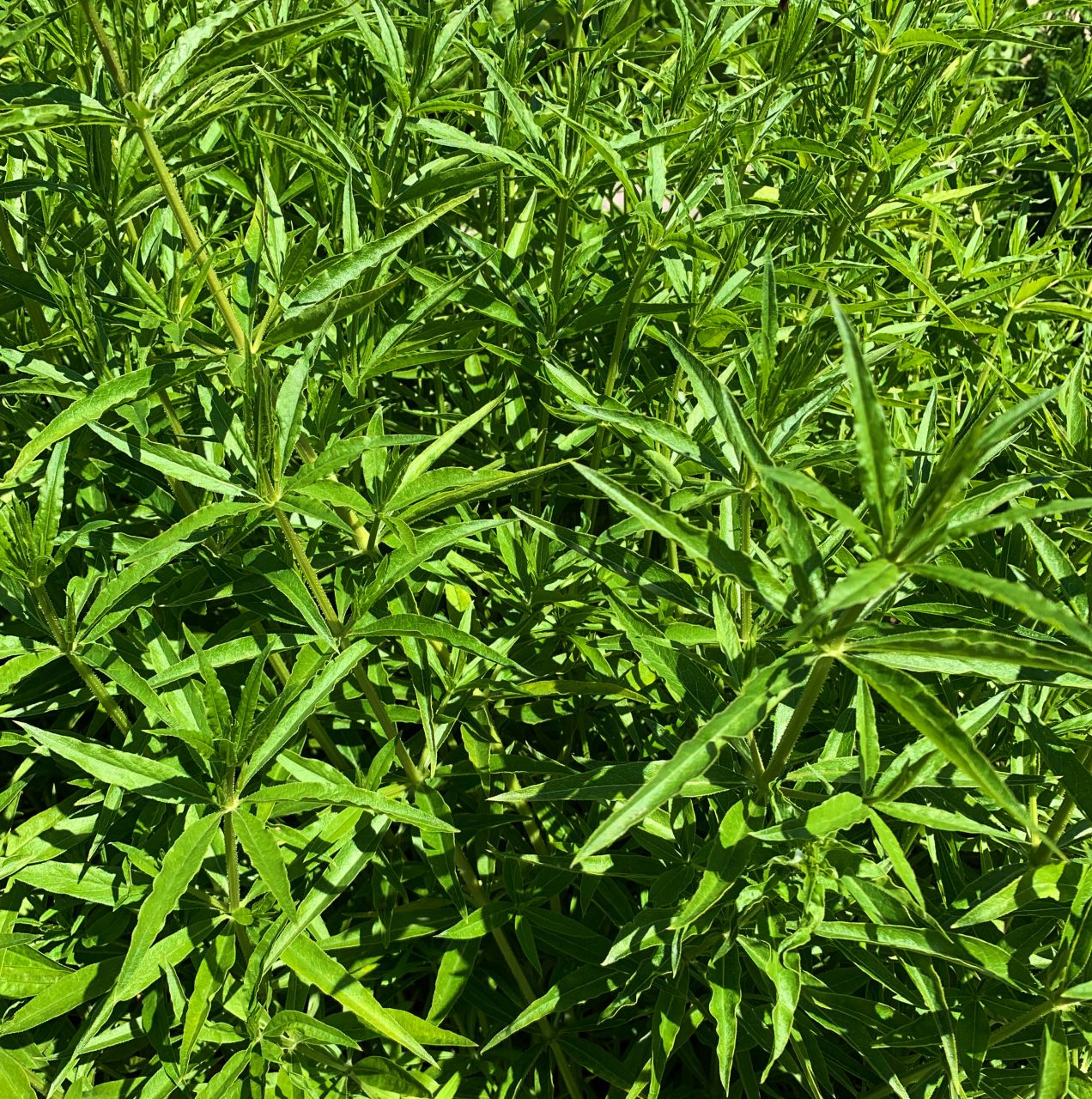 The economy and household matters were of great importance, as reflected in trade and trading relationships. Such goals could include the use of pharmacy to treat illnesses, plants for food and nutrition, household plants for dyeing and spinning, as well as ideas of self-sufficiency for their home country. In Alingsås, Sweden, for example, the common madder grew, though under less ideal climatic conditions. On 7 July 1746, Carl Linnaeus wrote in his Västergötland journal: ‘Madder, or Rubia tinctorum, was planted in fairly large quantities and thrived without being killed by the winter cold, when only covered with spruce twigs, yet requires more care and better soil with us than abroad or in Skåne: her red roots were already fairly large.’ (Photo: Viveka Hansen, The IK Foundation. Summer 2025, København Botanical Garden).
Early land-based postal systems and the crisscrossing of sailing routes around the globe were crucial for sending specimens and letters during long journeys. Secondarily, keeping up-to-date with news and publications within their interests, staying in contact with friends and family or learning about the progress of competing naturalists, and reporting to their patrons, etc. Despite the intentions to interconnect via correspondence or sending parcels during stopovers or at the final destination, most collections seem to have been kept among their personal possessions throughout most of the travels for best safekeeping and to minimise expenses, for all these assignments – paper, pins, bottles, tins and numerous other items were needed to conserve/preserve plants and animals to be transported home in the best condition.
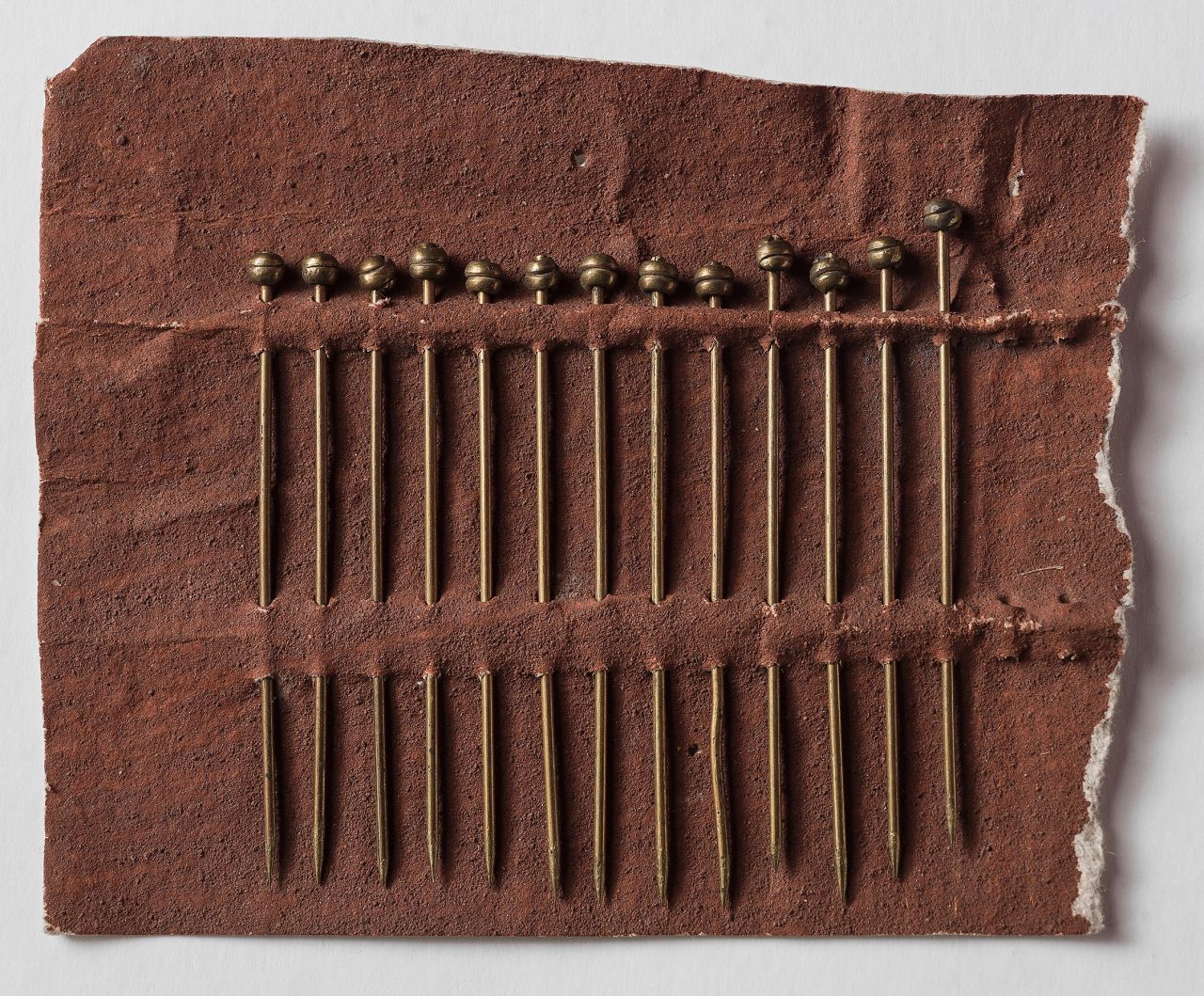 These unused pins (dated to c.1731) were part of professor of economics Anders Berch’s (1711-1774) collection in Uppsala. (Courtesy: Nordic Museum, Sweden. No: NM.0017648B:490. DigitaltMuseum).
Pins like those shown above, as well as a wide range of textile samples, were intended as teaching materials for his students and, together with other objects, formed a significant part of his collection from the 1740s to the 1770s. Uses for pins were, of course, many even in the 18th century – for example, fastening botanical specimens or insects on paper. An interesting detail about these 13 brass pins is the presence of ‘Chinese stamps’, suggesting they were acquired through the Swedish East India Company during its early trading years. These seemingly high-quality pins may be compared with the experiences of the ship’s chaplain and former student of Linnaeus, Pehr Osbeck (1723-1805), who took part in a journey by the same Company in the early 1750s. On 9 September 1751, he noticed in his journal about moths: ‘I found some of them [Phalæna atlas Linn.] in a merchant’s shop: they were all alive, upon a branch of the Nerium Oleander, and suffered themselves to be carried on it to the factory, where I stuck them upon pins; but the windows being open in the night, a bat came in and ate them all but the wings’. Whether the specified pins were purchased in Canton or brought from home is unknown.
Sources:
- Bartram’s House & Garden, Philadelphia, Pennsylvania, United States (Visit in July 2014, the IK Foundation project: BBE North America).
- Berkeley, Edmund & Berkeley Dorothy Smith, ed., The Life and Travels of John Bartram – From the Lake Ontario to the River St. John, Florida 1982.
- Blundt, Wilfrid, The compleat naturalist, A life of Linnaeus, London 1971.
- Engel, H., ‘The Life of Albert Seba’, Svenska Linnésällskapets Årsskrift 1937, pp. 75-100.
- Fara, Patricia, Sex, Botany & Empire, UK 2003.
- Goodman, David & Russell, Colin A. Ed., The Rise of Scientific Europe 1500-1800, Kent 1991.
- Hansen, Lars, ed., The Linnaeus Apostles – Global Science & Adventure, eight volumes, London & Whitby, 2007-2012 (The journals of the Linnaeus Apostles).
- Hansen, Viveka, Textilia Linnaeana – Global 18th Century Textile Traditions & Trade, London 2017.
- Howgego, Raymond John, Encyclopedia of Exploration to 1800, Australia 2003.
- Linnaeus, Carl, Wästgöta-resa på riksens högloflige ständers befallning förrättade åhr 1746…, Stockholm 1747.
- Manning, Patrick & Rood, Daniel, ed., Global Scientific Practice in an Age of Revolutions, 1750-1850, Pittsburgh 2016.
- Pennant, Thomas, A Tour in Scotland, and Voyage to the Hebrides, 1772.
- Richardson, John, The Annals of London –A Year-by-Year Record of a Thousand Years of History, UK 2000 (pp. 194-212).
- The Linnaean Correspondence. (In-depth studies of letters connected to individuals mentioned in this text).
- Uggla, Arvid H.J., ‘Petrus Forsskåls stamböcker’, Svenska Linnésällskapets årsskrift 1940, pp. 86-96.
- Vaillant, François Le, Travels into the interior parts of Africa, by way of the Cape of Good Hope; in the years 1780, 1781, 82, 83, 84, and 85, Two Volumes, London 1796.
- Wilhelm, Gottlieb Tobias, Unterhaltungen aus der Naturgeschichte / Die Insecten. Wien, 1810-11. Vol. Three.
More in Books & Art:
Essays
ISSN 2631-4746
The iTEXTILIS is a division of The IK Workshop Society – a global and unique forum for all those interested in Natural & Cultural History.
Open Access Essays by Textile Historian Viveka Hansen
Textile historian Viveka Hansen offers a collection of open-access essays, published under Creative Commons licenses and freely available to all. These essays weave together her latest research, previously published monographs, and earlier projects dating back to the late 1980s. Some essays include rare archival material — originally published in other languages — now translated into English for the first time. These texts reveal little-known aspects of textile history, previously accessible mainly to audiences in Northern Europe. Hansen’s work spans a rich range of topics: the global textile trade, material culture, cloth manufacturing, fashion history, natural dyeing techniques, and the fascinating world of early travelling naturalists — notably the “Linnaean network” — all examined through a global historical lens.
Help secure the future of open access at iTEXTILIS essays! Your donation will keep knowledge open, connected, and growing on this textile history resource.
For regular updates and to fully utilise iTEXTILIS' features, we recommend subscribing to our newsletter, iMESSENGER.
The iTEXTILIS is a division of The IK Workshop Society – a global and unique forum for all those interested in Natural & Cultural History.
Open Access Essays by Textile Historian Viveka Hansen
Textile historian Viveka Hansen offers a collection of open-access essays, published under Creative Commons licenses and freely available to all. These essays weave together her latest research, previously published monographs, and earlier projects dating back to the late 1980s. Some essays include rare archival material — originally published in other languages — now translated into English for the first time. These texts reveal little-known aspects of textile history, previously accessible mainly to audiences in Northern Europe. Hansen’s work spans a rich range of topics: the global textile trade, material culture, cloth manufacturing, fashion history, natural dyeing techniques, and the fascinating world of early travelling naturalists — notably the “Linnaean network” — all examined through a global historical lens.
Help secure the future of open access at iTEXTILIS essays! Your donation will keep knowledge open, connected, and growing on this textile history resource.
For regular updates and to fully utilise iTEXTILIS' features, we recommend subscribing to our newsletter, iMESSENGER.
The IK Foundation & Company Promoting Natural & Cultural History
|
Subscribe to our Newsletter | IK Global iMessenger |
Translate Page |



|
© The IK Foundation & Company 2026 - a truly European organisation since 1988 |
The IK
Workshop Society
Workshop Society
The Field
Station Lab
Station Lab
How to cite & Creative Commons
You are welcome to use the information and knowledge from
The IK Workshop Society, as long as you follow a few simple rules.
LEARN MORE & I AGREE
You are welcome to use the information and knowledge from
The IK Workshop Society, as long as you follow a few simple rules.
LEARN MORE & I AGREE
