
ikfoundation.org
The IK Foundation
Promoting Natural & Cultural History
Since 1988

- WELCOME
- THE IK WORKSHOP SOCIETY
- THE FIELD STATION LAB
- THE DONATION ROOM
- BOOKS & ART0


- CONTACT
iFellows Sign In
Find out more about becoming an iFellow...My Basket
Items: 0Total: €0.00
Home > The IKWS > iTextilis > THE STORY No. 9 | FIELDWORK – THE LINNAEAN WAY
How to cite & Creative Commons

THE STORY No. 9 | FIELDWORK – THE LINNAEAN WAY
Quadrants, Compasses and Other Scientific Instruments
ESSAYS No: CCXVI | March 2, 2026 | By Viveka Hansen
This Essay is part of the long-term research and publicise project
THE STORY | FIELDWORK THE LINNAEAN WAY
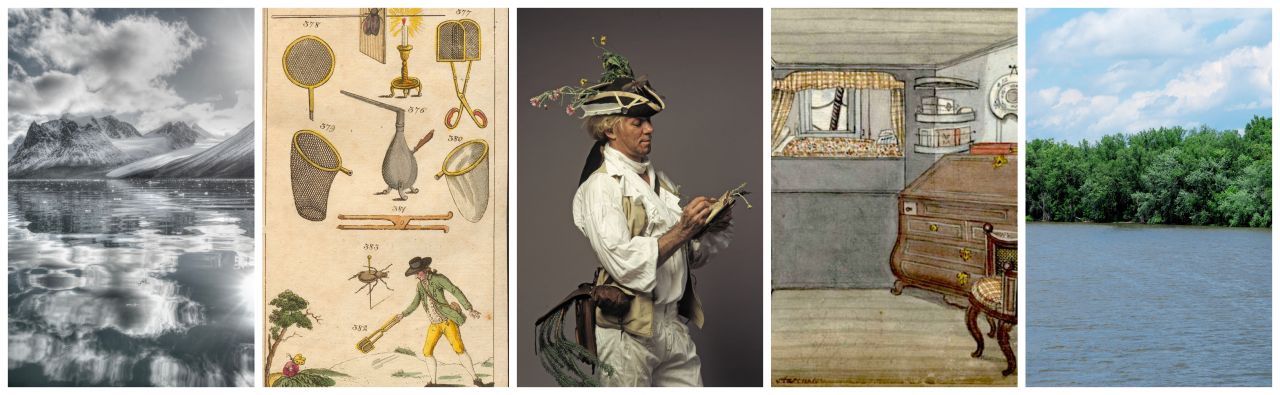 The global multidisciplinary project in Natural & Cultural History.
Scientific instruments were valuable and difficult to replace if lost during a journey outside Europe, and were preferably kept alongside personal belongings such as clothing and most treasured collections. Across the various stages of such undertakings, the extended network, and how and why such journeys unravelled as they did, are examined from hands-on, experimental, and theoretical perspectives, encompassing everything from basic needs to a luxury lifestyle. Foreseeing problems, having good luck, future success or misadventures, illness, death – no journeys were alike; overall, it seems to have been extremely difficult to plan ahead for all eventualities. It was obviously an advantage for a naturalist to have access to scientific instruments – quadrants, compasses, thermometers, and magnifying glasses – as well as technical know-how in general. This was also when navigation improved, and cartography developed, further assisting the European naturalists on long-distance voyages.
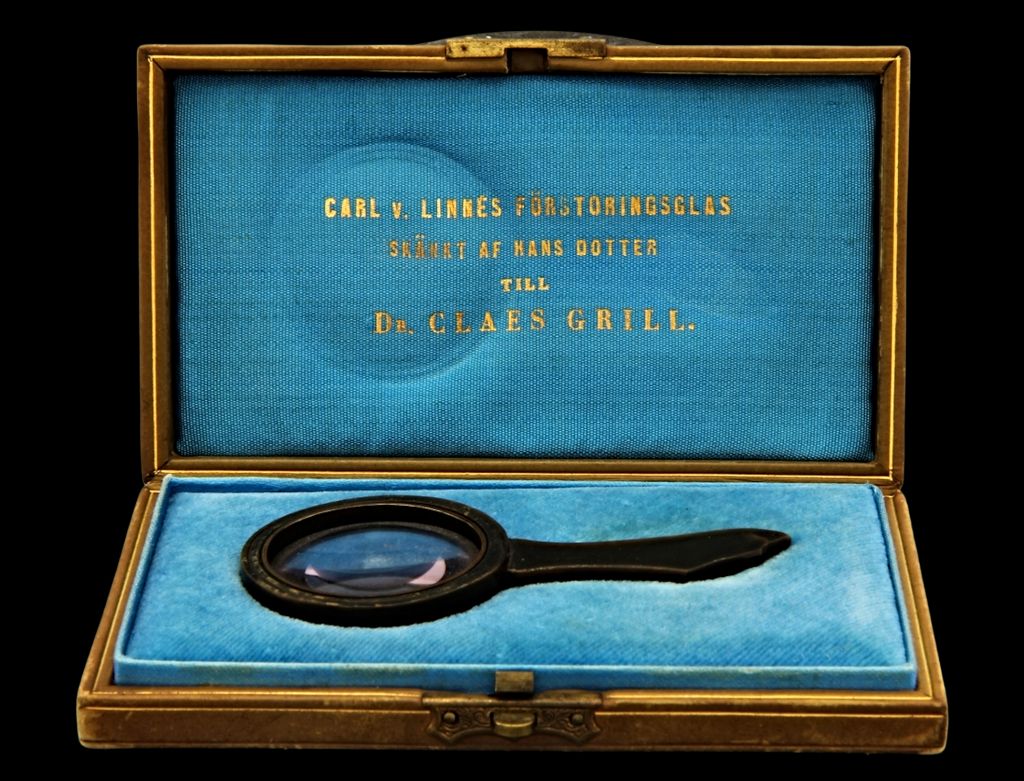 It is uncertain when Carl Linnaeus (1707-1778) bought or received this magnifying glass, but it is of French make and may have been kept among their personal belongings during several of his journeys abroad and in Sweden. (Courtesy: The Nordic Museum, Stockholm, Sweden. No. NM.0218304A-B. DigitaltMuseum).
 Information from the museum collection’s main catalogue provides illuminating historical details about the illustrated instrument shown above. ‘The magnifying glass was probably purchased by him [Linnaeus] during his foreign travels to Holland, France and England in the years 1735 to 1738’. Additionally described as: “Magnifying glass, round, frame of horn, the handle of horn; in a more recent case, light brown leather with Linnea, folding lid: signed ‘F Beck & son Stockholm’; with gold print in the lid: ‘Carl Linnaeus’ magnifying glass was donated by his daughter to Dr Claes Grill.” However, this could not refer to the Claes Grill (1705-1767), who was part of the Linnaean network, as he died before Linnaeus, but instead a later living relative with the same name, acquainted with one of Linnaeus’ daughters. On the other hand, it seems to have been surprisingly rare to use or at least make any mention in the travel journals of magnifying- or looking glasses, useful for natural history observations. Two such occasions may be glimpsed in the works of two of Linnaeus’ later students. Adam Afzelius (1750-1837) noted along the eastern coast of England on 10 May 1799: ‘In the morning I saw two birds swimming not far from the ship, but when I took the looking glass to view them through, they dived in a moment & remained for a long while under water.’ Whilst Carl Peter Thunberg (1743-1828) mentioned looking glasses as important merchandise for the Dutch East India Company along the sailing route in the 1770s, but never in connection with his own natural history work.
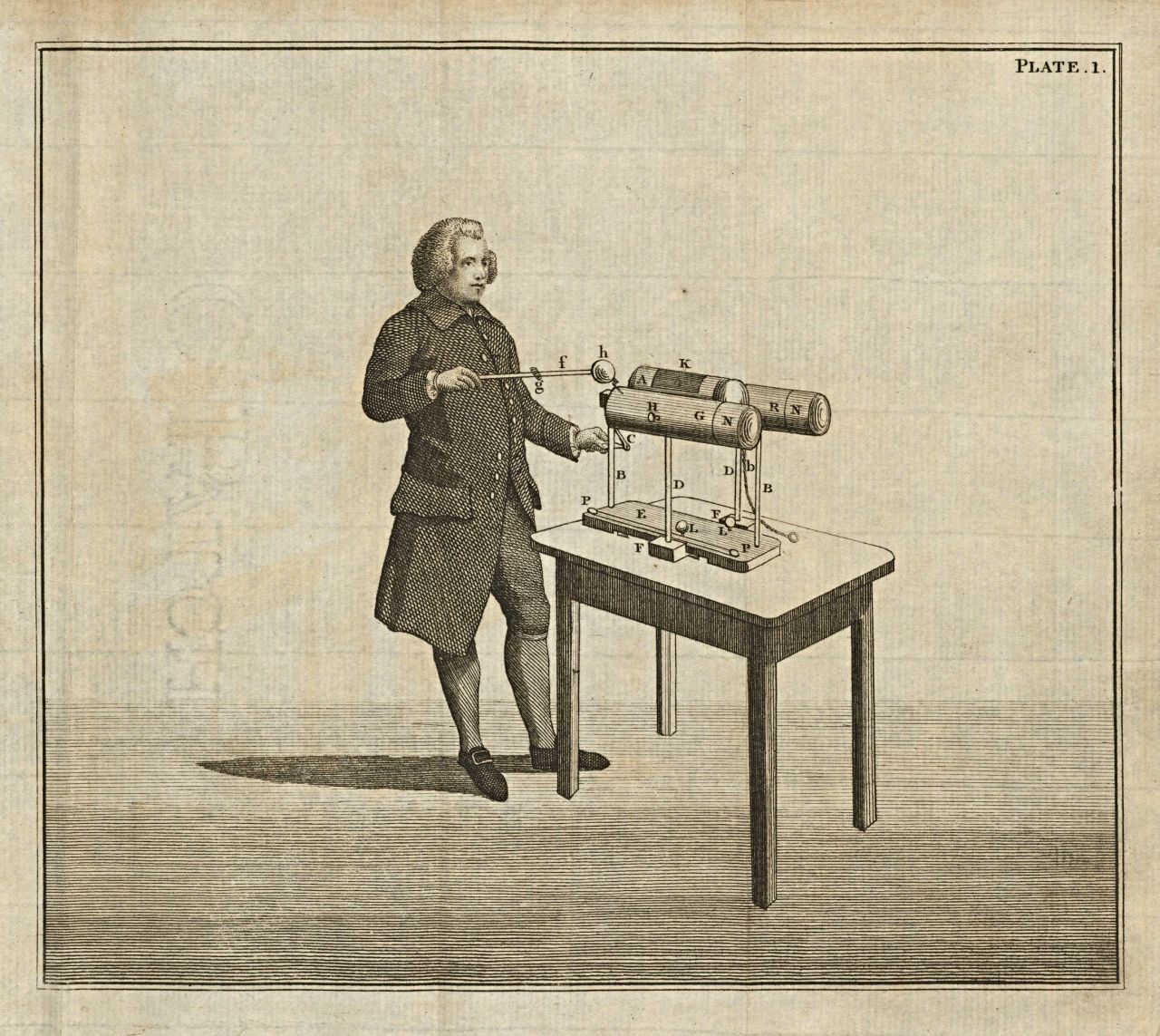 The London optician Edward Nairne (1726-1806) has an interesting link to the Linnaeus apostle Pehr Kalm’s (1716-1779) stay in London in 1748. He was coinciding with the year when Nairne took over a shop on Threadneedle Street, which was situated at a short walking distance from where Kalm had his lodgings on Fleet Street during parts of his stay. (Courtesy: Houghton Library, Harvard University, 90W-164. Public Domain).
 Pehr Kalm visited Edward Nairne’s establishment, as evidenced by a trading card from the optician, rediscovered between the pages of his handwritten journal, today kept at the Helsinki University Library. According to Kalm’s travelling account, dating 1747 to 1751, he purchased ‘eye-glasses’ in London in May 1748, and after returning to London from the North American colonies in the spring of 1751, another pair was acquired on another occasion during the journey. Almost without a doubt, the glasses/spectacles were purchased from this shop, as they were useful or even necessary aids for Kalm during his natural history work. The illustration shows one of the optician’s inventions, a few decades later, originally published in Nairne's 1783 volume, ‘The Description and Use of Nairne’s Patent Electrical Machine'.
![Furthermore, another of Edward Nairne’s scientific instruments has a direct link to the Linnaean network, which was his first marine tube barometer in use on James Cook’s (1728-1779) second voyage 1772-75, where the botanists Anders Sparrman (1748-1820), Johann Reinhold Forster (1729-1798) and his son Georg[e] Forster (1754-1794) participated. This miniature portrait by Niclas Lafrensen the Younger (1737-1807), in gouache, depicts the naturalist Anders Sparrman after his more than four-year voyage, circa 1776-1780. (Courtesy: Nationalmuseum, Stockholm, Sweden. Public Domain).](https://www.ikfoundation.org/uploads/image/3a-sparrman-1058x1280.jpg) Furthermore, another of Edward Nairne’s scientific instruments has a direct link to the Linnaean network, which was his first marine tube barometer in use on James Cook’s (1728-1779) second voyage 1772-75, where the botanists Anders Sparrman (1748-1820), Johann Reinhold Forster (1729-1798) and his son Georg[e] Forster (1754-1794) participated. This miniature portrait by Niclas Lafrensen the Younger (1737-1807), in gouache, depicts the naturalist Anders Sparrman after his more than four-year voyage, circa 1776-1780. (Courtesy: Nationalmuseum, Stockholm, Sweden. Public Domain).
Furthermore, another of Edward Nairne’s scientific instruments has a direct link to the Linnaean network, which was his first marine tube barometer in use on James Cook’s (1728-1779) second voyage 1772-75, where the botanists Anders Sparrman (1748-1820), Johann Reinhold Forster (1729-1798) and his son Georg[e] Forster (1754-1794) participated. This miniature portrait by Niclas Lafrensen the Younger (1737-1807), in gouache, depicts the naturalist Anders Sparrman after his more than four-year voyage, circa 1776-1780. (Courtesy: Nationalmuseum, Stockholm, Sweden. Public Domain).The cut of Anders Sparrman’s coat is what basically dates the portrait to those years, as compared to an identical cut of the garment worn by his travelling companions (on James Cook’s first voyage), Johann Reinhold Foster and his son George Forster, in the portrait of them in oil on canvas from 1780. Moreover, Sparrman is wearing a light-coloured waistcoat, and his shirt has a gauzy frill down the front, in the fashion of the time for men of the upper classes. One observation by Sparrman concerning scientific instruments was noted in his journal, southernmost Africa, between Zwellendam and Muscle Bay in 1775: ‘By means of the compass I had brought with me, I traced out the shore here, having investigated it, partly on foot and partly on horseback, as far as is indicated by the dots in the map.’ Another individual within the Linnaean network was the cartographer Carsten Niebuhr (1733-1815), who, in his travel account from the Royal Danish Expedition to Arabia from 1761 to 1767, compared locally used instruments with various thermometers. In November 1762, in Jeddah, for instance, he referred to: ‘…One thought my quadrants were much better than the Muslim astronomers’ small wood quadrants…’. Whilst he, the following year on 31 July, noted: ‘In our quarters in Samfur, I lost my compass…’ There still also exists a microscope made by the English instrument maker John Cuff (c.1708-c.1772), which Carl Linnaeus is believed to have purchased during his stay in London in 1736. It must be assumed that he used it frequently during travels and work at home alike, taking great care of the microscope, as it still is in good condition today.
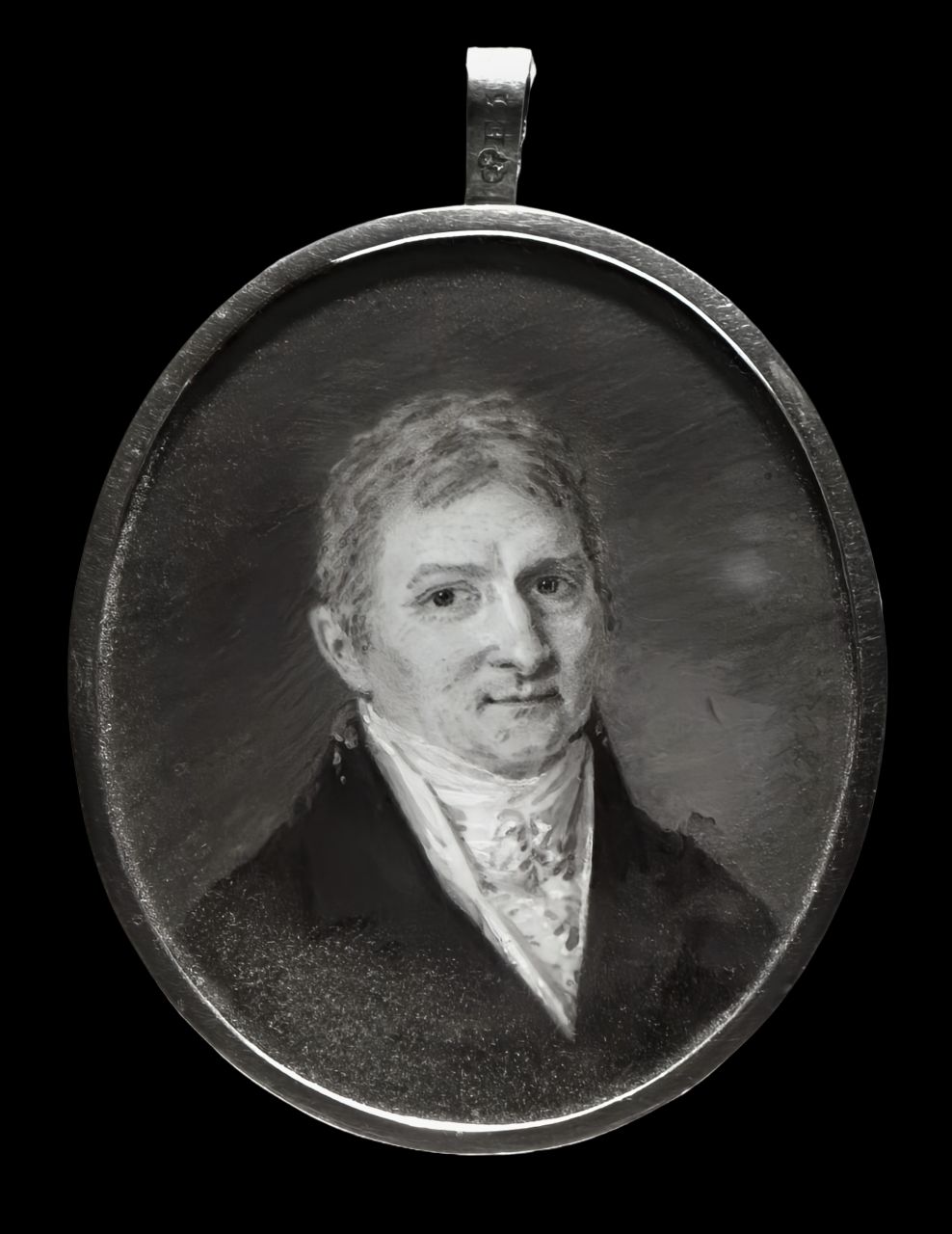 This portrait depicts Linnaeus’ final travelling apostle, Adam Afzelius. The portrait from his time at Uppsala, approximately ten years after his return from London, is in miniature form. Afzelius is, as far as can be discerned from the bust portrait, dressed in the manner typical of the time with a white artfully tied cravat and a double-breasted frock coat of dark blue or black wool. A naturalist who evidently used a looking glass according to his own observations in 1799, as quoted earlier.| By L.H. Roos af Hjelmsäter 1813. (Courtesy: National Museum, Stockholm, Sweden (The National Portrait Collection).
 Some sort of measuring work was often part of a natural historian’s mission on longer or shorter journeys, thermometers being the most common measuring instrument, as judged by notes in travel journals and pledges for the loan of such objects from the Royal Swedish Academy of Sciences and others. Whilst water testers, rulers, quadrants, clocks, telescopes (underwater), barometers, plum lines, compasses, etc., were part of some travellers’ luggage or in other cases used onboard ships as described in journals, logbooks, correspondence and other writings. Such an observation was mentioned in ‘The Journals of Joseph Banks’ voyage up Great Britain’s west coast to Iceland and to the Orkney Isles July to October 1772’ in Scotland on 6 August: ‘Accordingly, we set out carrying a barometer with us in order to measure the height of the hill about halfway up the hill we met a covey of ptarmigans & I was fortunate enough to shoot two’. Joseph Banks (1743-1820) maintained an interest in scientific instruments throughout his life, particularly as a long-term fellow of the Royal Society, elected at 23 in 1766, and later served as president of the society for 41 years.
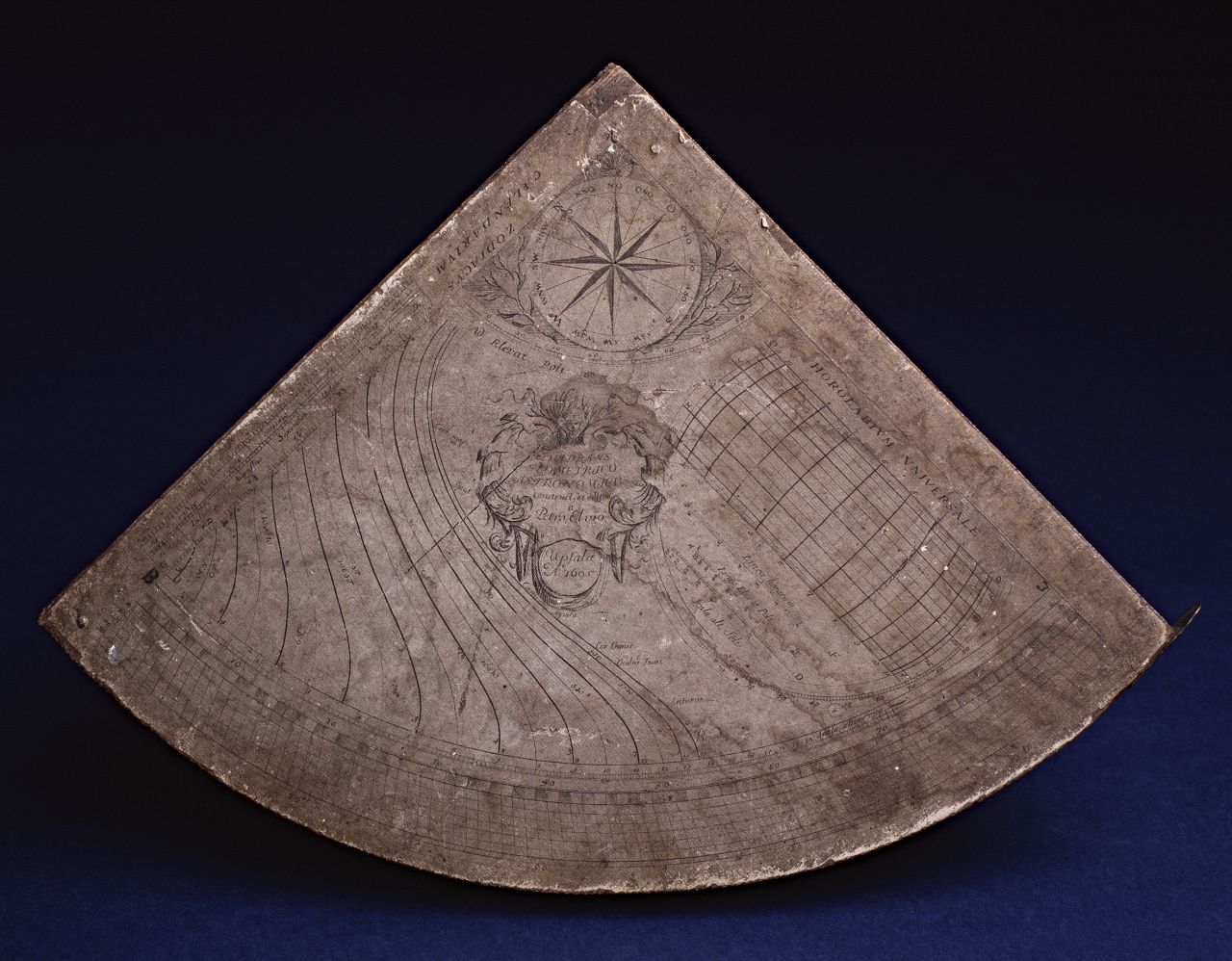 In the naturalist-cum-ship’s chaplain Pehr Osbeck’s (1723-1805) journal on the outward leg with a Swedish East India Company ship in April 1751, close to the Canary Islands, such a wooden quadrant was mentioned in passing. He noted: ‘When the seamen want to get into a boat where these fish frequent, they must take care not to put their feet into the water, for I once saw a dogfish attempting to swallow a large wooden quadrant, but it was not able to do it, as it was too broad, and therefore only left the marks of its teeth on it.’ (Collection: Centre for History of Science, Stockholm, Sweden. Quadrant made in 1708). Photo: Tony Sandin/The IK Foundation, London.
 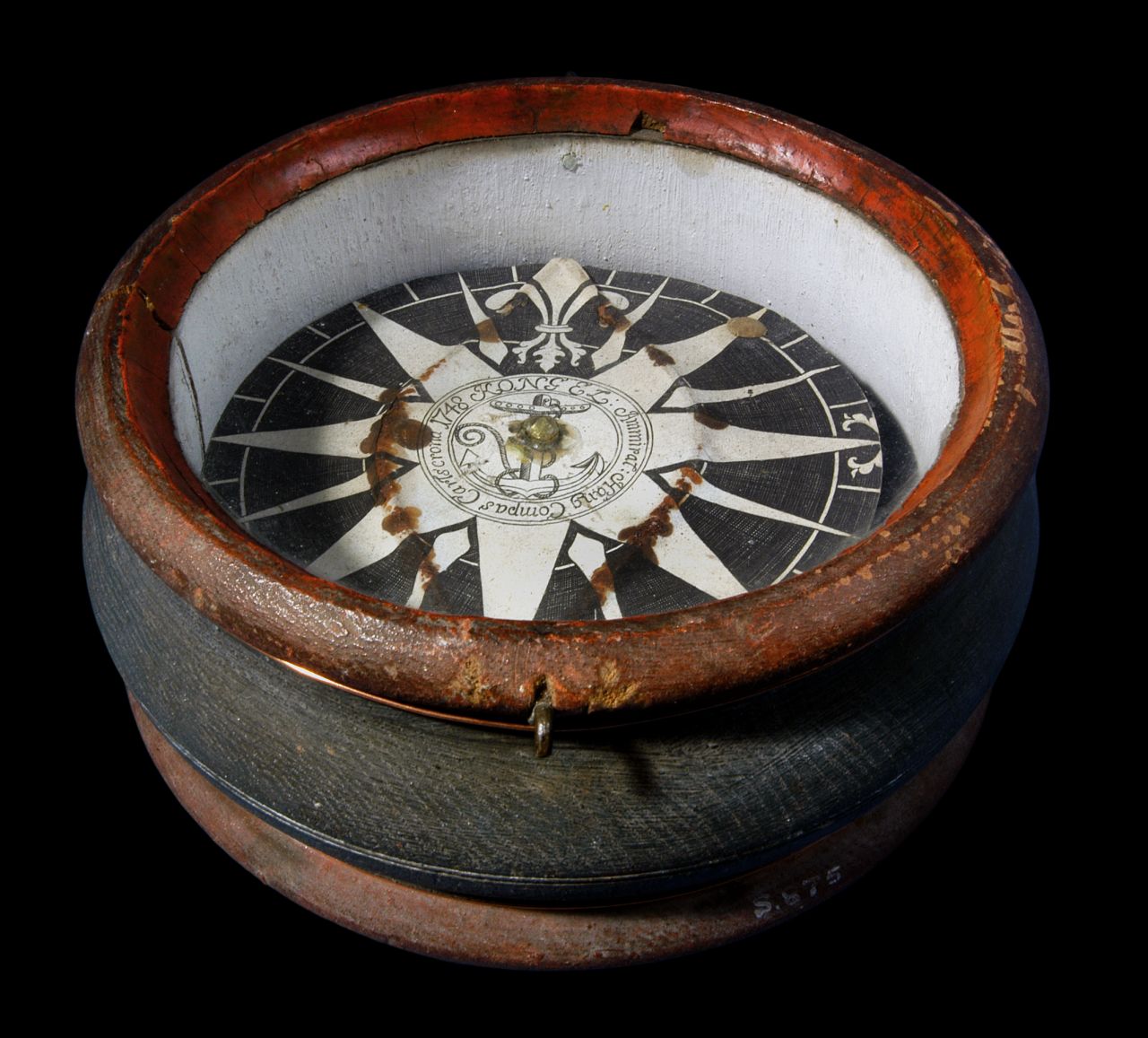 Compass dated 1748, made in the harbour city of Karlskrona. Almost contemporary with Linnaeus’ very first travelling apostle, Christopher Tärnström (1711-1746). His journal states that on 1 December 1745, he left home and, ten days later, arrived in Göteborg, where the ship Calmar was anchored. It was not until 13 February 1746 that the ship set sail, however, and his real voyage began. In its entirety, his travel journal is meticulously detailed, with descxxxriptions of daily life on board as well as his more professional duties. Although it was not for him to tend to the scientific instruments whilst being a ship’s chaplain on this East India ship, they must have interested him greatly as he willingly participated in the work with compasses, thermometers, hourglasses and the navigators’ observations. (Courtesy: Statens Sjöhistoriska Museum, Stockholm, Sweden).
 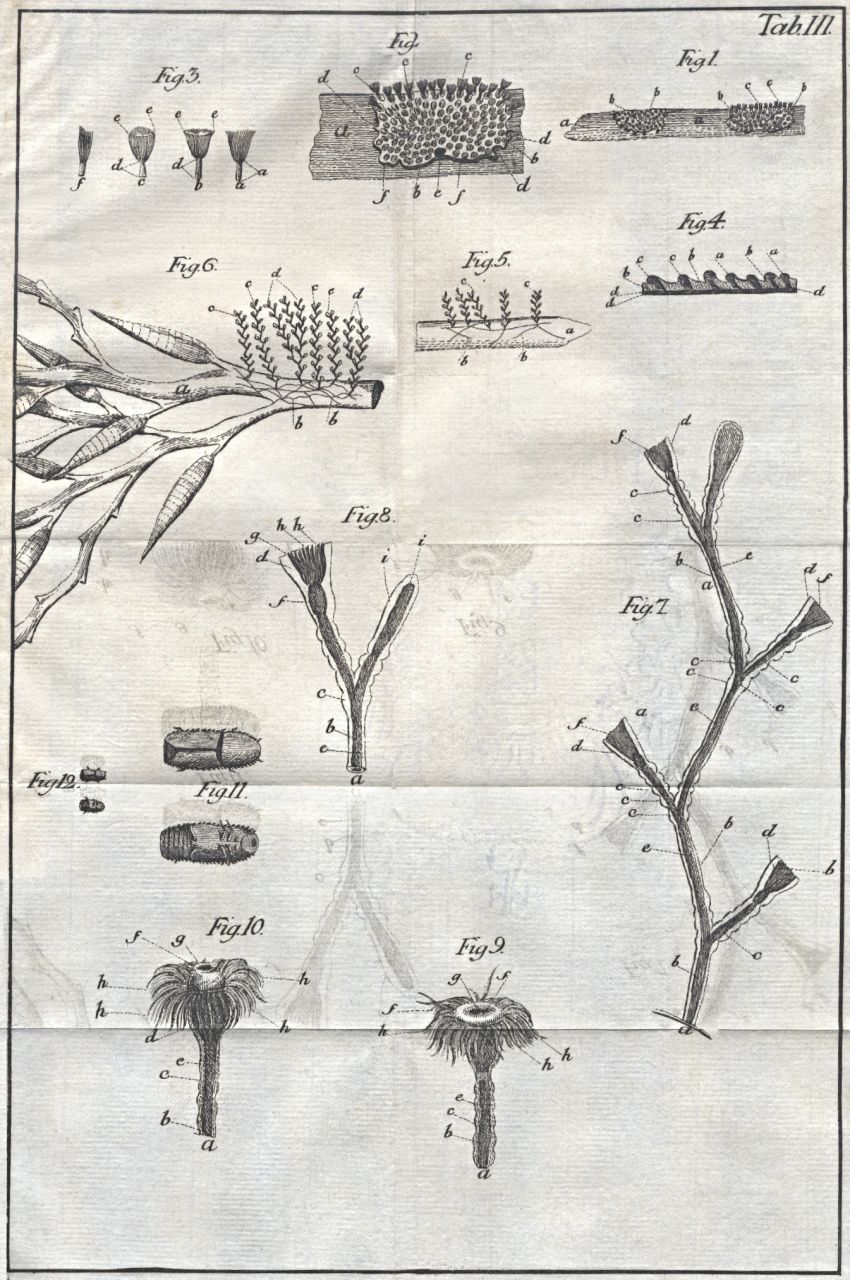 The apostles’ use of microscopes can be exemplified by this informative “Beskrifning på tvänne fina Coraller” (Representation of two fine Corals) by Pehr Löfling, Kungl. Vetenskapsakademiens Handlingar (Proceedings of the Royal Swedish Academy of Sciences), 1752, separate plate III, fig. 7. He also noted that: ‘Coral plant (Fig. 5) seen through a microscope which makes the object very large.’ (Collection: Centrum för Vetenskapshistoria/Centre for History of Science, Stockholm, Sweden). Photo: Tony Sandin/The IK Foundation, London.
The Royal Swedish Academy of Sciences – founded in 1739 – was an important supplier of thermometers for naturalists’ scientific work and for several other travellers. Göran Rothman’s (1739-1778) three-year-long journey to Tunisia and Libya in the 1770s was financed by the same Academy, which provided 2,000 Rixdollar copper coins and likewise assisted with the loan of instruments, such as microscopes and thermometers. Whilst Pehr Löfling (1729-1756) at the start of his journey in 1751 was already a fellow of the Royal Swedish Academy of Sciences. He was able to borrow the same instruments, which were much needed for the investigative work. The journey was funded by the Spanish Embassy and the Swedish East India Company. A third apostle Pehr Kalm wrote on the same theme in his journal when leaving Sweden, via Norway and England to North America in October 1747: ‘Here I not only received the instruments constructed for me by the Royal Academy of Sciences for the purpose of making observations, such as an astrolabe, a compass, two thermometers, in addition to which Professor Strömer presented a third [thermometer],…’
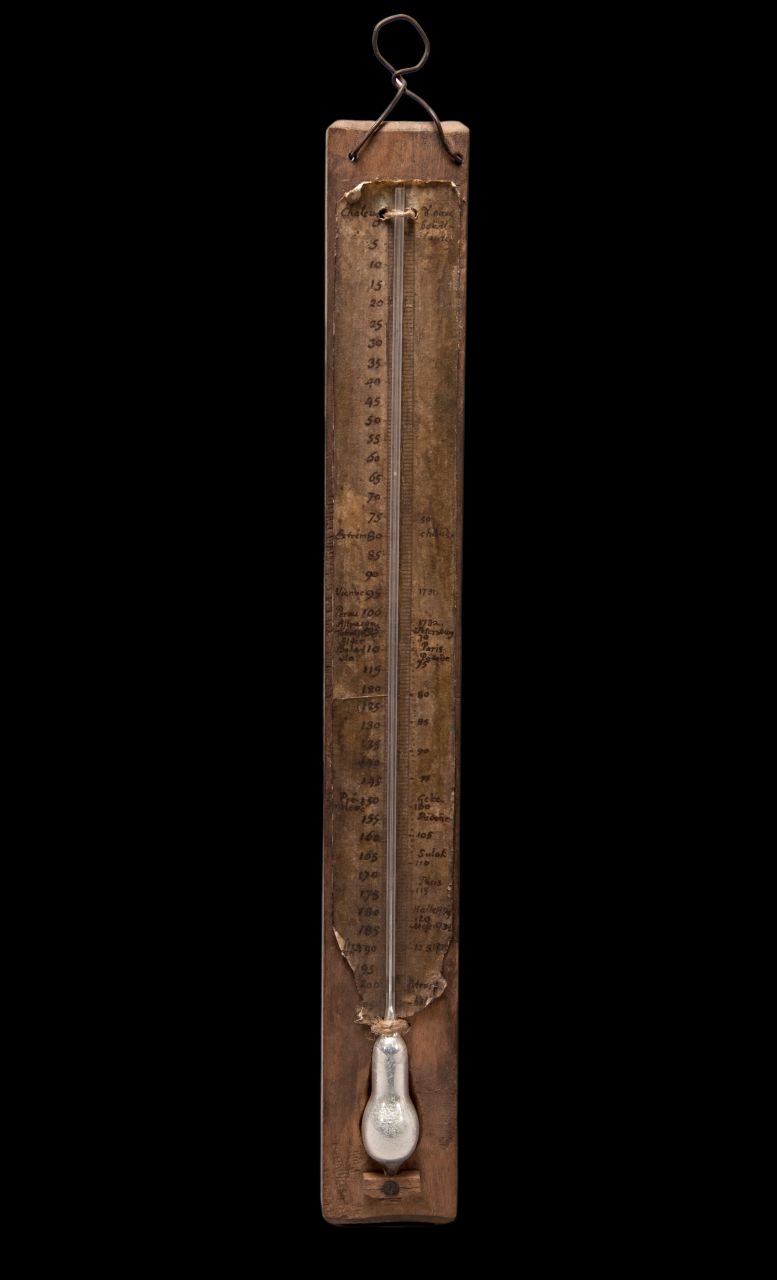 The only apostle who seems to have lacked access to a thermometer was Pehr Osbeck when the Swedish East India Company ship returned from Canton. Sailing close to Java on 6th February in 1752, he noted: ‘I had no thermometer, but the leaves of Camellia and of the Batatas showed that it was colder here than in China. The accounts of seamen of a greater degree of cold at the South Pole are pretty probable.’ This replica of Anders Celsius’ thermometer of glass and wood, dating 1741-1742, may have been a model used by the travelling naturalists, or a more weather-resistant model where the temperature scale was engraved into a metal or wooden model. (Courtesy: Tekniska museet, Sweden, TEKS0055284, Digitalt Museum).
![This 18th-century depiction of a fish market in Batavia (Jakarta) provides a useful comparison with the apostle Carl Peter Thunberg’s repeated informative texts of the town. For instance, the necessity of using thin cotton and silks in the hot and humid climate of Batavia appears on a number of occasions in Thunberg’s records. The ship arrived in the town on 18 May 1775, at the start of the hottest season, lasting from June to October. The thermometer was recorded to have shown 86° Fahrenheit [30°C], as well as the air humidity being high, with the town being situated close to the water. The sea provided only scant coolness during the evenings and nights. The days were described as follows: ‘…as it is impossible to be out at least to walk between nine and four o’clock in the day, without being quite overcome with heat and dissolved in sweat, though one’s dress be ever so light and airy’. | Print, published in London 1744-46 (Courtesy: Wellcome Images, L0038161).](https://www.ikfoundation.org/uploads/image/9a-batavia-wellcome-1280x1101.jpg) This 18th-century depiction of a fish market in Batavia (Jakarta) provides a useful comparison with the apostle Carl Peter Thunberg’s repeated informative texts of the town. For instance, the necessity of using thin cotton and silks in the hot and humid climate of Batavia appears on a number of occasions in Thunberg’s records. The ship arrived in the town on 18 May 1775, at the start of the hottest season, lasting from June to October. The thermometer was recorded to have shown 86° Fahrenheit [30°C], as well as the air humidity being high, with the town being situated close to the water. The sea provided only scant coolness during the evenings and nights. The days were described as follows: ‘…as it is impossible to be out at least to walk between nine and four o’clock in the day, without being quite overcome with heat and dissolved in sweat, though one’s dress be ever so light and airy’. | Print, published in London 1744-46 (Courtesy: Wellcome Images, L0038161).
This 18th-century depiction of a fish market in Batavia (Jakarta) provides a useful comparison with the apostle Carl Peter Thunberg’s repeated informative texts of the town. For instance, the necessity of using thin cotton and silks in the hot and humid climate of Batavia appears on a number of occasions in Thunberg’s records. The ship arrived in the town on 18 May 1775, at the start of the hottest season, lasting from June to October. The thermometer was recorded to have shown 86° Fahrenheit [30°C], as well as the air humidity being high, with the town being situated close to the water. The sea provided only scant coolness during the evenings and nights. The days were described as follows: ‘…as it is impossible to be out at least to walk between nine and four o’clock in the day, without being quite overcome with heat and dissolved in sweat, though one’s dress be ever so light and airy’. | Print, published in London 1744-46 (Courtesy: Wellcome Images, L0038161).However, the winter was unusually cold in Smyrna (Izmir), as Fredrik Hasselquist (1722-1752) wrote to his former teacher, Carl Linnaeus, in a letter dated 29 January 1750. ‘For five days past, the cold in Smyrna has been unusually severe. The Florentine thermometer points to 68. The ice has been so thick at the sides of the harbour that the Dutch have skated on it. The oldest people in the town do not remember such severe weather having lasted so long at any time before. If the winter in Upsala, is in proportion as severe as this, God alone can save Upsala garden. Being accustomed to Swedish winters, I should not mind this if I had but a Swedish stove. I am obliged to sit at a miserable coal fire to write this, and never was so cold in Sweden as in the miserable architecture of this country.’ Whilst Anders Sparrman, travelling as a botanist on James Cook’s second voyage during the departure from New Zealand on 23 June 1773, also finally made a note about temperature and clothing. ‘When, eventually, in mid-July, we changed our course to northerly and a few days later had reached 31° latitude, the albatrosses and Procellariæ left our company also. The thermometer rose, ascending to 61°. The warmth reminded us then to don summer clothes.’
Scientific instruments on 18th-century natural history journeys from a global perspective is obviously a major subject, which this case study has exemplified only via the extended network of the famous Swedish naturalist Carl Linnaeus. To plan prior to a voyage was of the greatest importance, which several of his apostles expressed in their journals and correspondence. One of them was the earlier-mentioned Göran Rothman, who was on a journey to Tripoli over a three-year period. When he set out on his journey in August 1773, he noted: ‘I was provided with proper instructions and necessary instruments such as thermometers, water-collector, water-tester, microscopes, weights, accurate measuring-rods for Swedish weight and length, etc.' He also borrowed a ‘small hand-held telescope’ via the botanist Peter Jonas Bergius (1730-1790) and Johan Carl Wilcke (1732-1796) at the Royal Swedish Academy of Sciences, evident via a signed note (no. 246, 19 June 1773) and also mentioned to be used by himself during the return voyage in the Mediterranean. Rothman wrote on 23 May 1776 in his diary: ‘The town Marbella was seen yesterday and today, and Esteprune could be seen well today with the telescope’.
Conducting scientific experiments on textile materials was one minor branch of their investigations, in which instruments such as water collectors, thermometers, and microscopes facilitated the collection and development of knowledge about “exotic” plants and animals for Europeans. Foremost, focusing on the scientific specimens of botanical rarities, preserved animals, insects, seeds, ethnographic artefacts, etc., gathered during the long voyages, amounted to substantial collections, but the transports were rarely problem-free. Pehr Osbeck, for example, wrote that he carried live plants and animals that died at sea, and Christopher Tärnström had problems with collections of natural specimens going mouldy. The collected works may also include preparatory studies on textile raw materials, such as seed sowing and transport. On his voyage from Sierra Leone, Adam Afzelius experimented with sowing cotton seeds in boxes, which germinated well with the help of his daily care, but a storm killed off the plants when salt water washed over the deck two weeks before arriving in London. Anders Sparrman, in turn, transported seeds sealed in boxes, including those of the New Zealand flax, but he was unable to get any of them to grow a few years later after his return to Sweden. That shows some of the practical problems arising with the scientific collections over the many months at sea, and at times, several years passed before the material could be unpacked. In addition, heat, cold, humidity, saltwater, dehydration, space constraints, and disputes over watering presented further obstacles to be considered.
Sources:
- Blundt, Wilfrid, The Compleat Naturalist: A Life of Linnaeus, London, 1971.
- Eriksson, Anders & Grandin, Karl, ‘Scientific Instruments’, The Linnaeus Apostles – Global Science & Adventure, (ed. L. Hansen), Vol. One. pp. 278-306.
- Hansen, Lars, ed., The Linnaeus Apostles – Global Science & Adventure, eight volumes, London & Whitby, 2007-2012 (Vol. One. p. 289. illustrated microscope [Västergötland museum, Sweden. no. 021027148053] | Vol. Two-Vol. Seven. Quotes for the mentioned instruments by the Linnaeus Apostles 1745-1799).
- Hansen, Viveka, Textilia Linnaeana – Global 18th Century Textile Traditions & Trade, London 2017.
- Kalm, Pehr, Pehr Kalms Amerikanska reseräkning, Svenska Litteratursällskapet i Finland, Helsingfors 1956.
- Löfling, Pehr, ‘Beskrifning på Tvänne fina Coraller’, Kungl. Vetenskapsakademiens Handlingar, XIII:2, pp. 109-128, 1752.
- Kerkkonen, Martti, Peter Kalm’s North American Journey – Its Ideological Background and Results, Helsinki 1959 (London advertisement, mentioned in caption two, is illustrated on p. 119).
- Niebuhr, Carsten, Rejsebeskrivelse fra Arabien og andre omkringliggende lande (Intr., Michael Harbsmeier), København 2003 (Vol. One. Quote in translation from Danish. pp. 312 & 450).
- Rauschenberg, Roy A, ed., ‘The journals of Joseph Banks’ voyage up Great Britain’s west coast to Iceland and to the Orkney Isles, July to October 1772.’ Proceedings of the American Philosophical Society, vol 117, no 3, 1973, pp. 186-225 (quote p. 202).
- The Nordic Museum, Stockholm, Sweden. No. NM.0218304A-B/. (Information about the magnifying glass from the main catalogue & quotes in translation from Swedish, DigitaltMuseum).
- Tärnström, Christopher, Christopher Tärnströms journal – En resa mellan Europa och Sydostasien år 1746, ed. Kristina Söderpalm, London & Whitby 2005.
More in Books & Art:
Essays
ISSN 2631-4746
The iTEXTILIS is a division of The IK Workshop Society – a global and unique forum for all those interested in Natural & Cultural History.
Open Access Essays by Textile Historian Viveka Hansen
Textile historian Viveka Hansen offers a collection of open-access essays, published under Creative Commons licenses and freely available to all. These essays weave together her latest research, previously published monographs, and earlier projects dating back to the late 1980s. Some essays include rare archival material — originally published in other languages — now translated into English for the first time. These texts reveal little-known aspects of textile history, previously accessible mainly to audiences in Northern Europe. Hansen’s work spans a rich range of topics: the global textile trade, material culture, cloth manufacturing, fashion history, natural dyeing techniques, and the fascinating world of early travelling naturalists — notably the “Linnaean network” — all examined through a global historical lens.
Help secure the future of open access at iTEXTILIS essays! Your donation will keep knowledge open, connected, and growing on this textile history resource.
For regular updates and to fully utilise iTEXTILIS' features, we recommend subscribing to our newsletter, iMESSENGER.
The iTEXTILIS is a division of The IK Workshop Society – a global and unique forum for all those interested in Natural & Cultural History.
Open Access Essays by Textile Historian Viveka Hansen
Textile historian Viveka Hansen offers a collection of open-access essays, published under Creative Commons licenses and freely available to all. These essays weave together her latest research, previously published monographs, and earlier projects dating back to the late 1980s. Some essays include rare archival material — originally published in other languages — now translated into English for the first time. These texts reveal little-known aspects of textile history, previously accessible mainly to audiences in Northern Europe. Hansen’s work spans a rich range of topics: the global textile trade, material culture, cloth manufacturing, fashion history, natural dyeing techniques, and the fascinating world of early travelling naturalists — notably the “Linnaean network” — all examined through a global historical lens.
Help secure the future of open access at iTEXTILIS essays! Your donation will keep knowledge open, connected, and growing on this textile history resource.
For regular updates and to fully utilise iTEXTILIS' features, we recommend subscribing to our newsletter, iMESSENGER.
The IK Foundation & Company Promoting Natural & Cultural History
|
Subscribe to our Newsletter | IK Global iMessenger |
Translate Page |



|
© The IK Foundation & Company 2026 - a truly European organisation since 1988 |
The IK
Workshop Society
Workshop Society
The Field
Station Lab
Station Lab
How to cite & Creative Commons
You are welcome to use the information and knowledge from
The IK Workshop Society, as long as you follow a few simple rules.
LEARN MORE & I AGREE
You are welcome to use the information and knowledge from
The IK Workshop Society, as long as you follow a few simple rules.
LEARN MORE & I AGREE
